
5,016 kWh nominal energy
Battery-side nameplate energy is the starting point for sizing. Specify usable energy at the project connection point, including the operating window and auxiliary loads.
Response target: within 12 hours for project inquiries
energy storage
A 5,016 kWh liquid-cooled DC-side battery platform for utility-scale renewable, grid-support, and large microgrid projects.
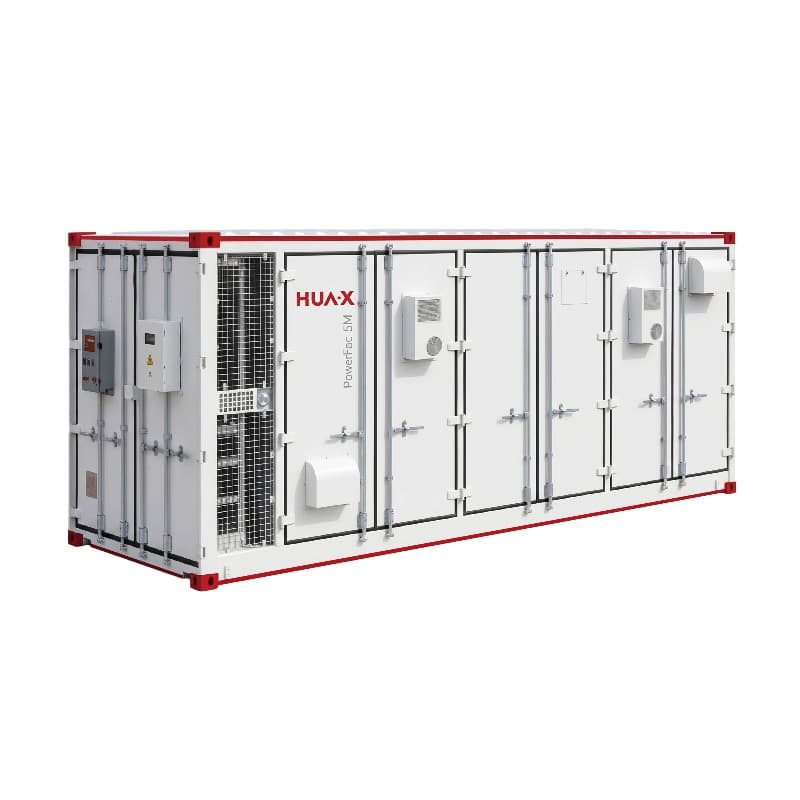
PowerFac-5M combines twelve 418 kWh battery clusters in a containerized DC-side architecture, giving 5,016 kWh nominal battery energy. This is not a complete AC power or usable-energy specification: PCS selection, operating window, auxiliary consumption, and the point of measurement must be defined for the project.
Battery-side nameplate energy is the starting point for sizing. Specify usable energy at the project connection point, including the operating window and auxiliary loads.
Include cooling auxiliary consumption in the project energy balance and request operating limits for the site's ambient conditions.
Twelve clusters at 418 kWh each total 5,016 kWh nominal energy. Confirm the quoted configuration and its interfaces in controlled drawings.
Define PCS, transformer, switchgear, EMS/SCADA and commissioning responsibilities separately. The battery-container rating does not define a complete AC system.
| Parameter | Value | Condition or note |
|---|---|---|
| Nominal energy | 5,016 kWh | Battery-side nameplate energy; usable energy at the project connection point requires a separate specification. |
| Nominal DC voltage | 1331.2 V | Battery-side voltage, not an AC grid-connection voltage. |
| DC operating voltage | 1164.8–1497.6 V | Confirm compatibility with the proposed PCS DC input range. |
| Battery cluster energy | 418 kWh | Energy stated for each of the twelve battery clusters. |
| Battery cluster quantity | 12 | Twelve clusters × 418 kWh = 5,016 kWh nominal energy. |
| Charge/discharge rate | ≤0.5P | Notation reproduced from the product sheet; request its power basis and test conditions before deriving a kW rating or duration. |
| Thermal management | Liquid cooling | Include cooling auxiliary consumption in the project energy balance. |
| Enclosure rating | IP55 | Battery packs are stated as IP65; the liquid-cooling unit compartment is excluded from the container IP rating. |
| Operating temperature | −20 to 50 °C | The sheet does not provide a temperature-dependent power curve; request the proposed operating limits. |
| Dimensions (L × W × H) | 6058 × 2438 × 2896 mm | Allow separately for installation clearances and service access. |
| Approximate mass | 43 t | Confirm the final shipping configuration for transport, lifting, and foundation design. |
Validate the duty cycle, site, interfaces, and operating objective before confirming model suitability.
Validate the duty cycle, site, interfaces, and operating objective before confirming model suitability.
Validate the duty cycle, site, interfaces, and operating objective before confirming model suitability.
The product rating does not define a turnkey project scope. The quotation should identify who supplies, integrates, installs, commissions, and accepts each applicable item.
Review the EMS interface, operating modes and commissioning responsibilities alongside the proposed battery and PCS supply scope.
Use the public page and any available procurement brief for initial comparison. Request the applicable controlled data sheet, drawings, test or certificate evidence, and commercial documents for the exact quoted model and destination.
For transport planning, match the UN 38.3 test summary and shipping documents to the quoted battery model. Confirm the applicable requirements for the proposed shipment.
Download the English brief with nominal specifications, operating limits, supply responsibilities and the information needed for a comparable quotation.
Source: PowerFac-5M product brochure, pages 1–2.
Download PowerFac-5M brief (PDF)Plan the site, delivery access and system scope for PowerFac-5M →
Define factory and site acceptance records for the quoted BESS scope →
A battery container's MWh rating does not define a complete grid-connected AC energy storage system. Separate the DC battery boundary from PCS, transformer, switchgear, controls, civil works, installation, commissioning, and acceptance before comparing proposals.
Read guide →A defensible C&I battery energy storage system size comes from interval load data, a ranked operating objective, power constraints and usable energy at a stated measurement point. Start with the duty the site needs, then evaluate the cabinet or container configuration against it.
Read guide →Air and liquid cooling are system-level choices. Compare heat density, temperature uniformity, ambient conditions, parasitic demand, acoustic limits, maintenance, fault response, and site layout—not capacity alone.
Read guide →A BESS safety review should connect cell and module behavior to electrical protection, BMS controls, thermal management, enclosure, fire strategy, emergency response, site layout, installation, and operating procedures.
Read guide →A useful BESS RFQ states the operating objective, site data, power, usable energy, duration, electrical interface, environment, safety requirements, scope split, documents, and acceptance criteria.
Read guide →Frequently asked questions
Answers cover the information needed to confirm configuration, operating conditions, documentation, price, and delivery.
Technical questions and quotation enquiries for this model.