By HUA-X
Published · Updated
Key takeaways
- A DC-side container specifies battery energy and DC operating limits; it does not by itself specify AC power at the grid connection.
- PCS, transformer, switchgear, protection, EMS/SCADA, auxiliaries, civil works, installation, and commissioning must each have an owner.
- Compare nominal DC energy, usable energy, net AC energy, power, duration, auxiliaries, and measurement points as separate terms.
- A responsibility matrix and acceptance plan prevent a low apparent equipment price from hiding missing project scope.
1. Start by locating the quoted system boundary
Ask where the supplier's stated power, energy, efficiency, and responsibility begin and end. A DC battery container and a complete AC-connected BESS can use the same energy headline while covering materially different equipment, engineering, and site work.
- Identify the DC battery terminals, PCS AC terminals, transformer side, and utility or site meter as distinct measurement points.
- Mark which equipment and services are included, optional, by others, or still undefined.
- Require every performance figure to state its measurement point and operating conditions.
2. Define what the DC battery scope includes
A DC-side scope normally starts with battery energy, voltage range, current or rate limits, thermal management, BMS, internal protection, communications, enclosure, and auxiliary requirements. The exact included items still belong in the model-specific quotation and bill of materials.
Do not infer included equipment from a product photograph or a family description. Request the controlled configuration, interfaces, exclusions, and document revision quoted for the project.
- Battery module, rack or cluster arrangement and the approved cell configuration
- BMS hierarchy, alarms, isolation, contactors, fuses, sensors, and internal communications
- Cooling equipment, fire-system interfaces, auxiliary supply, enclosure, access, and service clearances
- DC output, grounding or insulation-monitoring approach, and the interface presented to the PCS
3. Build the missing AC and site integration scope
A complete AC project may require PCS, transformers, switchgear, protection, metering, station service, EMS/SCADA, communications, grid studies, civil works, cabling, installation, commissioning, and site acceptance. The required architecture changes with the connection voltage, grid code, site, duty, and contracting model.
- PCS rating, DC input range, AC output, reactive-power duty, overload limits, and control modes
- Transformer, LV/MV switchgear, protection, metering, earthing, cabling, and grid-connection responsibilities
- EMS/SCADA functions, plant controller, communications, cybersecurity requirements, dispatch ownership, and data handover
- Foundation, drainage, access, lifting, clearances, acoustic limits, fire strategy, installation, testing, training, and handover
4. Compare power, energy, and duration without mixing boundaries
Battery-side nominal energy does not equal usable energy at the battery terminals or net energy at the AC connection. Likewise, an energy rating does not establish the PCS power, continuous operating point, or discharge duration.
If a proposal uses a rate notation such as P or C, require the supplier to define its basis and conditions. Do not convert an undefined notation into a guaranteed kW value or duration.
- Nominal battery energy and DC voltage window
- Usable DC energy with SOC, temperature, rate, reserve, and life-stage conditions
- PCS continuous power and any separately defined short-duration duty
- Net AC energy after conversion and project auxiliaries at the agreed meter
- Charge power, recharge window, standby consumption, and repeated-dispatch requirements
5. Put scope, documents, and acceptance in one matrix
List each equipment package, engineering task, document, site service, and test with one responsible party. Use the same matrix for every bidder so technical and commercial comparisons cover the same project.
- Supplier, EPC, owner, utility, and local contractor responsibility for each item
- Design inputs, drawings, studies, calculations, manuals, certificates, test reports, and as-built records
- Factory, site, commissioning, performance, reliability, and handover tests with pass criteria
- Exclusions, interfaces, dependencies, schedule, warranty boundary, service access, and change control
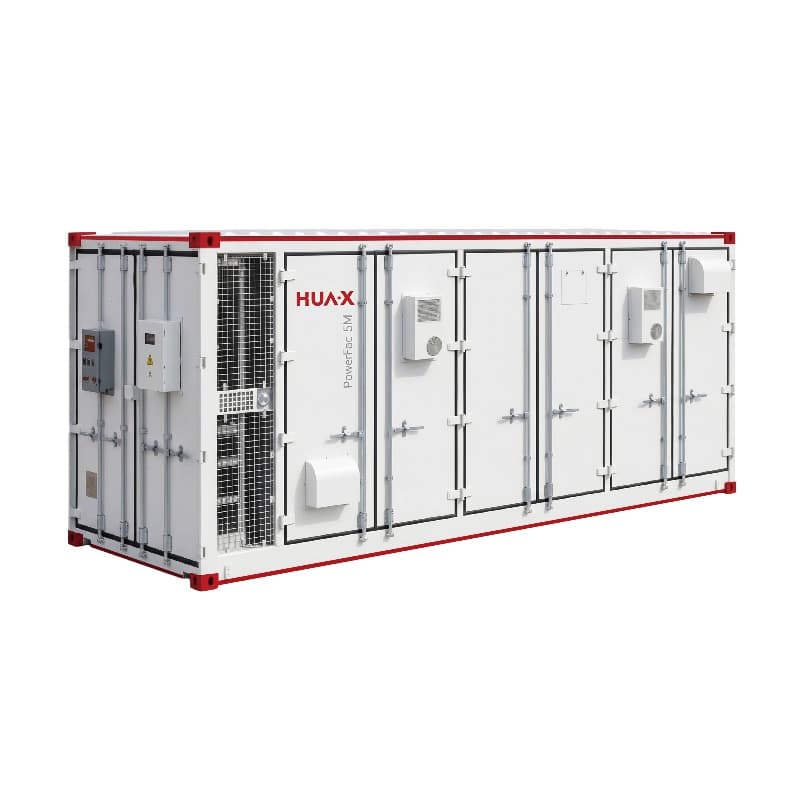
6. Read the PowerFac-5M record as a DC-side example
The published PowerFac-5M record lists 5,016 kWh nominal battery energy, 1331.2 V nominal DC voltage, a 1164.8-1497.6 V DC operating range, twelve 418 kWh clusters, liquid cooling, and a charge/discharge notation of no more than 0.5P.
Those figures describe the published battery-container boundary. They do not establish a 5 MW AC system, guaranteed usable AC energy, a guaranteed two-hour duration, or default inclusion of PCS, transformer, switchgear, EMS, installation, and commissioning.
For a project proposal, provide the target AC power and duration, generation or load profile, grid interface, site conditions, destination, quantity, schedule, and required supply boundary. Ask the quotation to define the meaning of 0.5P and the applicable controlled technical documents.
References and further reading
These sources explain the technical background. Product performance, approvals, and installation requirements must be confirmed for the quoted system and project.
PowerFac-5M product record and procurement questions — HUA-X
Published DC-side product values and explicit procurement boundaries. The record does not define a complete AC system or guaranteed duration.
PowerFac-5M procurement brief — HUA-X
Model-specific published values, operating limits, unresolved 0.5P definition, and project information required with an RFQ.
Battery Energy Storage System RFQ Checklist — HUA-X
Project-basis, interface, responsibility, evidence, commercial, and acceptance questions for comparable proposals.
Nominal vs Usable Battery Energy — HUA-X
Definitions for nominal DC energy, usable energy, net AC energy, conversion losses, auxiliaries, and life-stage conditions.