Product definition
Approved model, drawing, bill of materials scope, revision, rated values, operating conditions, and interfaces.
Response target: within 12 hours for project inquiries
Quality & compliance
Review the model-level specifications, inspection evidence, traceability, certificate scope, transport documents, and order-specific records that support a battery or energy-storage proposal.
Review framework
Approved model, drawing, bill of materials scope, revision, rated values, operating conditions, and interfaces.
Supplier and material controls appropriate to the cell, plate, electronics, enclosure, connectors, and purchased components.
Defined work instructions, traceability, in-process checks, handling limits, and controlled nonconformance response.
Order-specific sampling or test plan, acceptance criteria, calibrated equipment, records, and release authority.
Current document holder, standard, number, scope, model applicability, issue date, validity, and verification source.
Approved configuration, packing list, labels, transport documents, inspection records, manuals, and agreed handover material.
Certificate source records
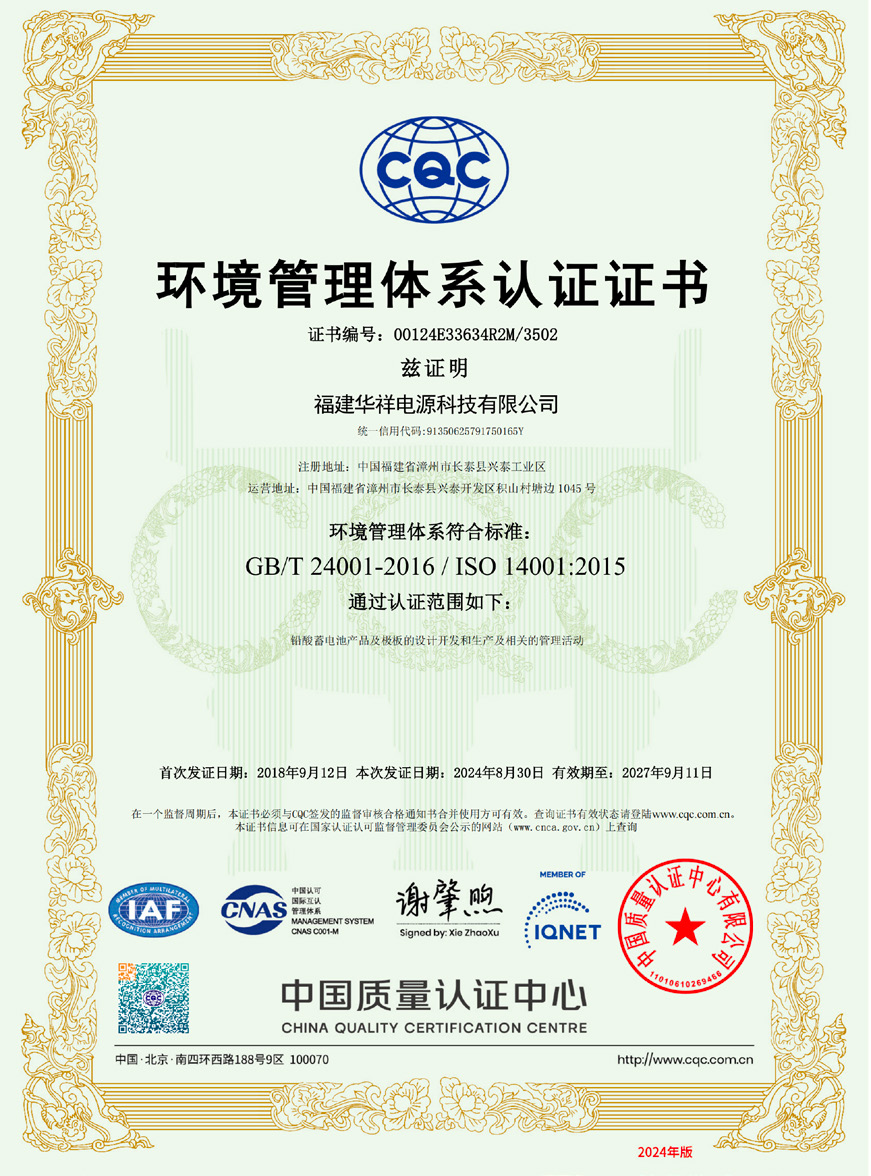
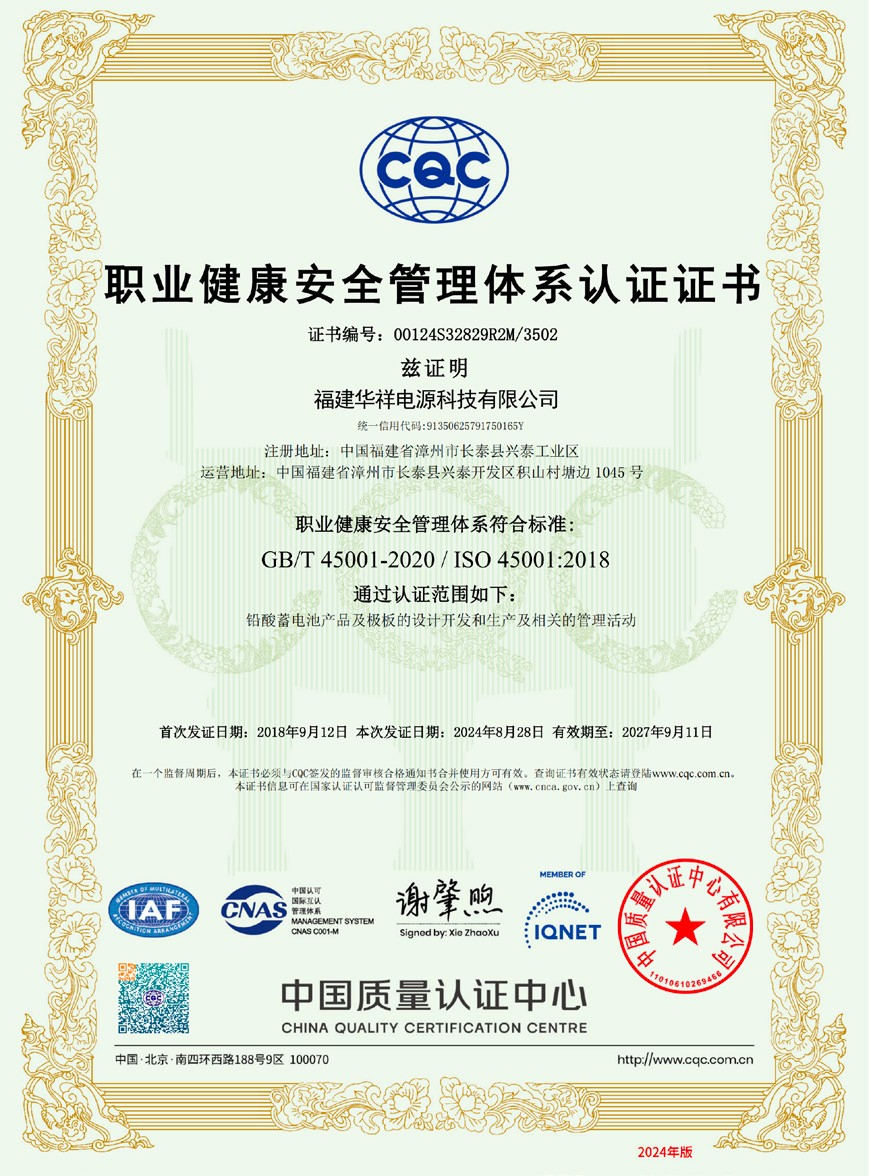
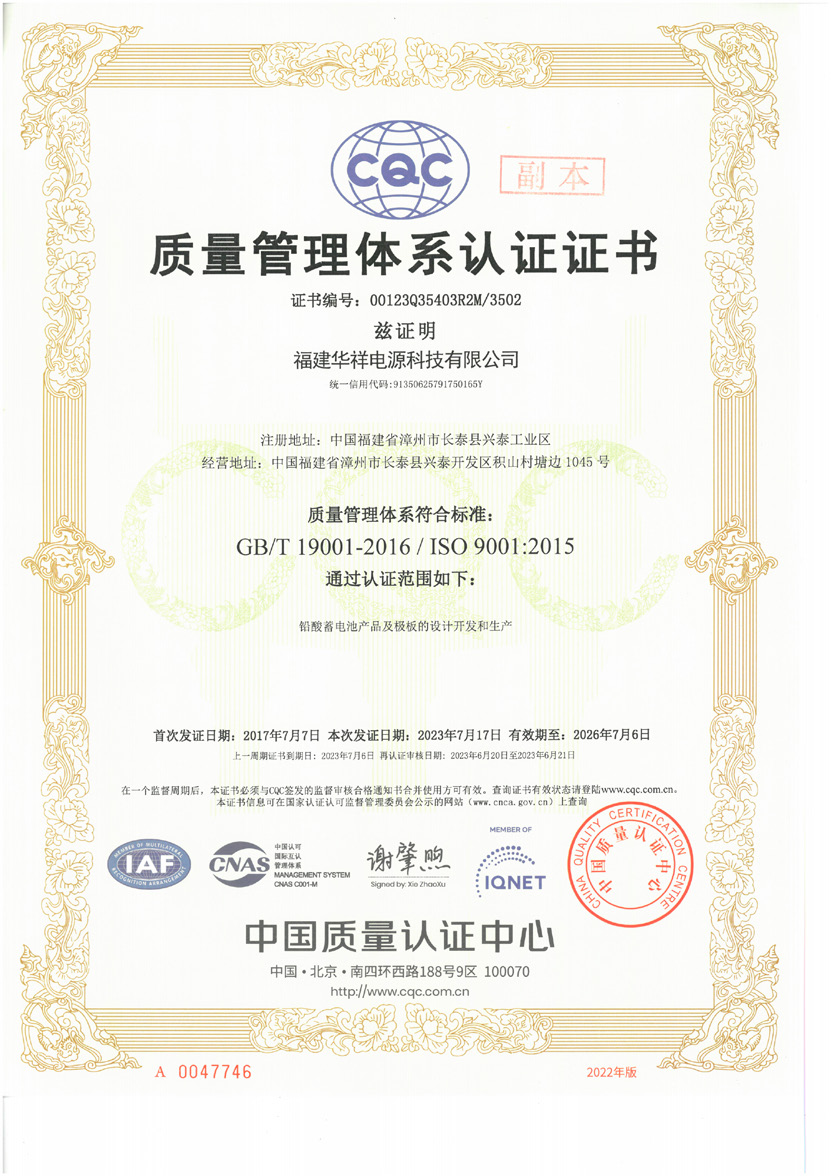
These three certificate images are reproduced from page 20 of the May 18, 2026 Chinese group introduction. Dates below are printed on the source records; they do not confirm current certification status.
All three records name 福建华祥电源科技有限公司 as the holder and China Quality Certification Centre (CQC) as the issuer. Their scope concerns lead-acid batteries and plates.
Source record
Standard: GB/T 24001-2016 / ISO 14001:2015
Certificate number: 00124E33634R2M/3502
Issued: August 30, 2024
Printed expiry: September 11, 2027
Scope (English translation): Design, development and production of lead-acid batteries and plates, and related environmental management activities.
View ISO 14001 source image →Source record
Standard: GB/T 45001-2020 / ISO 45001:2018
Certificate number: 00124S32829R2M/3502
Issued: August 28, 2024
Printed expiry: September 11, 2027
Scope (English translation): Design, development and production of lead-acid batteries and plates, and related occupational health and safety management activities.
View ISO 45001 source image →Historical record
Standard: GB/T 19001-2016 / ISO 9001:2015
Certificate number: 00123Q35403R2M/3502
Issued: July 17, 2023
Printed expiry: July 6, 2026
Scope (English translation): Design, development and production of lead-acid batteries and plates.
View ISO 9001 source image →Verify a record by its certificate number using the CQC management-system certificate query ↗. The issuer may require a verification code.
The source certificates require a surveillance-audit conformity notice during the surveillance period. Current issuer results and surveillance evidence have not been supplied here. The ISO 9001 source record expired on July 6, 2026; a renewed record is needed for current supplier review.
These management-system records do not establish product certification for PowerFac-261 or PowerFac-5M. Request the applicable model, configuration, market and order-specific document package with your RFQ.
Frequently asked questions
List the standards, inspection plan, transport documents, factory evidence, and order-level records required for the destination and application.