Application / Standby power

Telecom & UPS Backup Power

Standby battery banks should be sized from the protected load, required autonomy, DC bus, discharge rate, charger, temperature, redundancy, and end-of-life criteria.

Battery bank for UPS and standby power applications

What the telecom and ups backup solution must accomplish

Standby battery banks should be sized from the protected load, required autonomy, DC bus, discharge rate, charger, temperature, redundancy, and end-of-life criteria.

Backup loads may change over time, short runtimes draw higher current than long rate labels imply, and temperature or charger settings can materially affect available performance. A nominal Ah comparison alone cannot establish the required bank.

Recommended system-design approach

Verify the real load and DC architecture, select the correct discharge table, apply project aging and temperature assumptions, then check charger capacity, protection, rack loading, cable drop, ventilation, monitoring, and replacement access.

  • Measured load, autonomy, DC bus, end voltage, and redundancy criterion
  • Constant-power or constant-current discharge data at the required runtime
  • Ambient temperature, aging allowance, charger settings, and recharge requirement
  • Series and parallel arrangement, fault protection, cable voltage drop, and rack load
  • Monitoring, inspection, replacement, transport, and end-of-life plan

How to prepare a technical brief

A useful technical brief describes the operating problem before naming a product. Follow the steps below so the proposal can be sized against real loads, constraints, and operating priorities.

  • Measure or validate the steady and transient protected load.
  • Define required autonomy and acceptable end voltage.
  • Use the model discharge data at that duration, not only the nameplate Ah.
  • Verify charger, rack, protection, monitoring, and maintenance scope.

Product starting points

Compare suitable product starting points

Use published ratings to create a shortlist, then confirm the final configuration against the project data and site conditions.

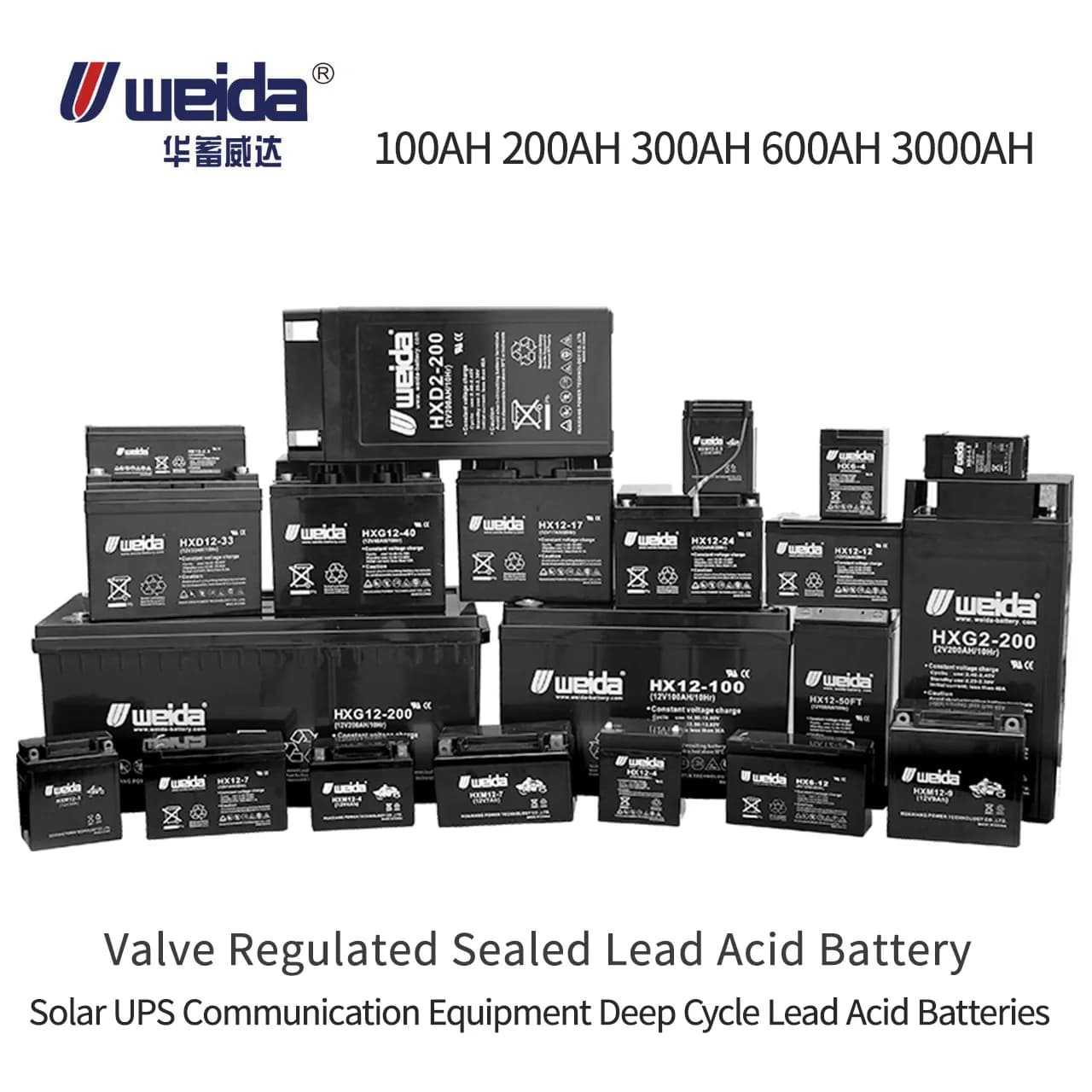
HX 12 V VRLA AGM Battery Series

backup power

HX 12 V VRLA AGM

Six verified 12 V VRLA AGM models spanning 7 Ah to 250 Ah, with capacity-rate, mass, and conditional design float-life data.

HX12-7
12 V, 7 Ah at 20HR, 2.05 kg
HX12-9.2
12 V, 9.6 Ah at 20HR, 2.65 kg
HX12-12
12 V, 12.9 Ah at 20HR, 3.45 kg

Technical reading

Use the supporting selection guides

technology guide

How VRLA AGM Works

A VRLA AGM battery immobilizes electrolyte in a glass-mat separator and is designed for gas recombination under controlled charging, but it still requires correct voltage, temperature, protection, ventilation, inspection, and replacement planning.

Read guide →
selection guide

LiFePO4 vs VRLA

Choose LiFePO4 or VRLA from the duty cycle, power, usable energy, charging, temperature, weight, space, maintenance, system integration, replacement plan, and total project cost—not a chemistry slogan.

Read guide →
buyer guide

BESS RFQ Checklist

A useful BESS RFQ states the operating objective, site data, power, usable energy, duration, electrical interface, environment, safety requirements, scope split, documents, and acceptance criteria.

Read guide →

Frequently asked questions

What buyers ask before specifying a battery system

Is VRLA design float life a warranty period?
No. Design float life is a reference value under stated float-service conditions. Actual service life depends on temperature, charging, discharge depth, frequency, installation, and maintenance, while warranty is a separate contractual term.
How should I choose between LiFePO4 and VRLA batteries?
Choose from the actual duty cycle, space and weight constraints, charging strategy, temperature conditions, maintenance plan, expected replacement interval, and total project cost. Chemistry alone does not determine the correct system.
What warranty applies to the products?
Warranty terms are model- and contract-specific. Ask for the written warranty supplied with the exact quotation; design life, cycle data, and warranty are different concepts and must not be treated as interchangeable.
How are batteries prepared for international shipment?
The required packaging and transport documents depend on battery chemistry, model, quantity, transport mode, and destination. Shipment planning begins only after those details are confirmed for the specific order.

Discuss a telecom and UPS backup project

Send real load and site inputs. The application context will stay attached to the inquiry.