
backup power

HX 12 V VRLA AGM Battery Series

Six 12 V VRLA AGM models spanning 7 Ah to 250 Ah, with capacity-rate, mass, and conditional design float-life data.
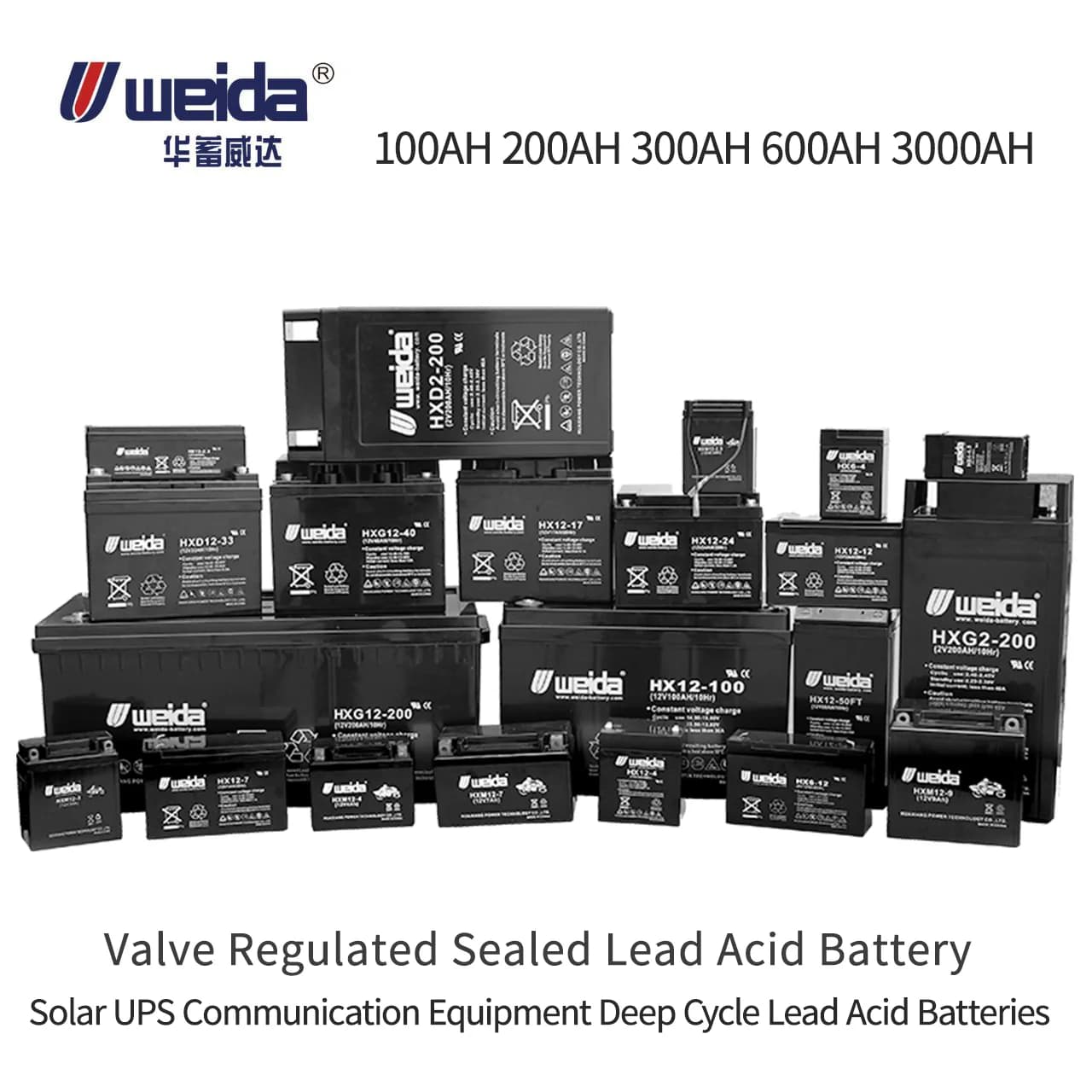
  • Six published 12 V models
  • 7 Ah to 250 Ah nominal capacity range
  • 20-hour and 10-hour rated models
  • Conditional design float life shown separately from warranty
HX12-7
12 V, 7 Ah at 20HR, 2.05 kg
HX12-9.2
12 V, 9.6 Ah at 20HR, 2.65 kg
HX12-12
12 V, 12.9 Ah at 20HR, 3.45 kg
HX12-100
12 V, 100 Ah at 10HR, 29.5 kg
HX 12 V VRLA AGM Battery Series

Product overview

The series supports standby and backup bank selection. Model capacity ratings use either a 20-hour or 10-hour rate, so runtime must be calculated from the appropriate discharge data rather than the Ah label alone.

Configuration note: nameplate values help define the starting point. Final usable energy, interfaces, operating limits, document scope, and commercial terms are confirmed for the specific project.

Six published 12 V models

Review this attribute together with the complete system, destination requirements, and operating conditions.

7 Ah to 250 Ah nominal capacity range

Review this attribute together with the complete system, destination requirements, and operating conditions.

20-hour and 10-hour rated models

Review this attribute together with the complete system, destination requirements, and operating conditions.

Conditional design float life shown separately from warranty

Review this attribute together with the complete system, destination requirements, and operating conditions.

Key specifications

HX 12 V VRLA AGM Battery Series — published technical data
ParameterValueCondition or note
HX12-712 V, 7 Ah at 20HR, 2.05 kg5-year design float life under stated float-service conditions.
HX12-9.212 V, 9.6 Ah at 20HR, 2.65 kg5-year design float life under stated float-service conditions.
HX12-1212 V, 12.9 Ah at 20HR, 3.45 kg5-year design float life under stated float-service conditions.
HX12-10012 V, 100 Ah at 10HR, 29.5 kg12-year design float life under stated float-service conditions.
HX12-20012 V, 200 Ah at 10HR, 59.5 kg12-year design float life under stated float-service conditions.
HX12-250E12 V, 250 Ah at 10HR, 71 kg12-year design float life under stated float-service conditions.

Applications to evaluate

UPS and standby battery banks

Validate the duty cycle, site, interfaces, and operating objective before confirming model suitability.

Telecom and control-system backup

Validate the duty cycle, site, interfaces, and operating objective before confirming model suitability.

Solar and off-grid systems where VRLA is specified

Validate the duty cycle, site, interfaces, and operating objective before confirming model suitability.

Review the application requirements

Selection, supply scope and engineering notes

  1. Use the applicable constant-power or constant-current discharge table for the target runtime.
  2. Apply the project's temperature, aging, redundancy, and end-voltage assumptions.
  3. Confirm charger settings, series-string voltage, parallel-string design, protection, rack loading, and ventilation.
  4. Do not interpret design float life as warranty or guaranteed field service life.

Confirm the project responsibility matrix

The product rating does not define a turnkey project scope. The quotation should identify who supplies, integrates, installs, commissions, and accepts each applicable item.

  • Battery system, BMS, thermal management, enclosure, internal protection, and communications
  • PCS, EMS or SCADA, transformer, switchgear, metering, external protection, and grid interface
  • Fire strategy, foundations, lifting, cable routing, installation, testing, and commissioning
  • Documentation, training, spare parts, warranty conditions, maintenance, and acceptance records

Technical documents

Use the public page and any available procurement brief for initial comparison. Request the applicable controlled data sheet, drawings, test or certificate evidence, and commercial documents for the exact quoted model and destination.

Guides for your technical review

How VRLA AGM Works

A VRLA AGM battery immobilizes electrolyte in a glass-mat separator and is designed for gas recombination under controlled charging, but it still requires correct voltage, temperature, protection, ventilation, inspection, and replacement planning.

Read guide →

LiFePO4 vs VRLA

Choose LiFePO4 or VRLA from the duty cycle, power, usable energy, charging, temperature, weight, space, maintenance, system integration, replacement plan, and total project cost—not a chemistry slogan.

Read guide →

BESS RFQ Checklist

A useful BESS RFQ states the operating objective, site data, power, usable energy, duration, electrical interface, environment, safety requirements, scope split, documents, and acceptance criteria.

Read guide →

Frequently asked questions

What buyers ask before specifying a battery system

Answers cover the information needed to confirm configuration, operating conditions, documentation, price, and delivery.

Is VRLA design float life a warranty period?
No. Design float life is a reference value under stated float-service conditions. Actual service life depends on temperature, charging, discharge depth, frequency, installation, and maintenance, while warranty is a separate contractual term.
How should I choose between LiFePO4 and VRLA batteries?
Choose from the actual duty cycle, space and weight constraints, charging strategy, temperature conditions, maintenance plan, expected replacement interval, and total project cost. Chemistry alone does not determine the correct system.
What warranty applies to the products?
Warranty terms are model- and contract-specific. Ask for the written warranty supplied with the exact quotation; design life, cycle data, and warranty are different concepts and must not be treated as interchangeable.
Which certifications are available?
Certification scope varies by model and destination. Request the current certificate and test-report package for the exact quoted model.
How are batteries prepared for international shipment?
The required packaging and transport documents depend on battery chemistry, model, quantity, transport mode, and destination. Shipment planning begins only after those details are confirmed for the specific order.
Why are prices not published on the product pages?
The listed products are project-configured B2B systems or battery series. Pricing depends on configuration, quantity, accessories, packaging, destination, and commercial terms, so quotations are prepared against a defined project scope.

Discuss the HX 12 V VRLA AGM

Technical questions and quotation enquiries for this model.