By HUA-X
Published · Updated
Key takeaways
- Do not compare systems on nominal kWh alone.
- Ask whether usable energy is measured at the battery DC terminals, PCS AC output or net site connection.
- State SOC limits, temperature, power, auxiliary consumption and the beginning- or end-of-life requirement.
- Separate guaranteed values, measured results and calculations from documented inputs.
1. Define each energy number and measurement boundary
Nominal battery energy is the declared nameplate value, commonly based on nominal voltage and capacity. It does not by itself describe energy delivered over the project's permitted discharge range.
Usable DC energy is the discharge energy available at a defined battery-side boundary under stated operating and test conditions. The allowed SOC range matters, but multiplying nameplate kWh by an SOC fraction is only a simplified estimate: actual voltage, discharge rate, limits and condition must be considered.
Gross AC energy is measured after the power-conversion equipment at a stated point, before any separately accounted auxiliary consumption.
Net AC energy at the site connection includes the equipment and losses inside that particular measurement boundary. Ask whether cooling, controls and any transformer are inside or outside it. A diagram showing the meters and auxiliary branch is often clearer than the word “usable.”
SAM's battery inputs distinguish nominal capacity from a smaller usable operating range and distinguish AC from DC quantities. Use supplier definitions and test data for the proposed configuration rather than assuming all data sheets use an identical convention.
2. State the conditions behind usable energy
Request the initial and final SOC, discharge power or profile, ambient and battery temperatures, stop conditions, reserve policy and auxiliary boundary. Identify whether the value applies at beginning of life or at a specified later condition. Do not deduct reserve twice when it is already represented by the minimum SOC.
SOC limits and capacity loss are separate inputs. SAM describes SOC limits relative to available battery capacity, which can change with degradation. For a real proposal, the capacity basis and SOC convention need to be explicit.
3. Reconcile a supplier's energy statement with its test boundary
Ask the supplier to identify the nominal battery energy and the measured or guaranteed usable-energy figure separately. For each usable-energy figure, request the applicable system configuration, start and stop conditions, discharge duty, temperature, capacity basis and measurement point.
Trace the energy statement from the battery boundary to the agreed AC delivery point. Check whether conversion losses, auxiliaries and any intervening site equipment are included. Keep each adjustment tied to its test report or documented calculation; do not infer the missing values from an unrelated product or project.
If only a nameplate rating is available, it cannot establish a project-specific net AC energy or runtime. Preserve the unknowns in the RFQ and require the final proposal and acceptance procedure to state the same boundary.
4. Do not substitute round-trip efficiency for discharge efficiency
Round-trip efficiency compares energy discharged with energy charged over a defined cycle and boundary. It includes the charging part of the process. A one-way conversion efficiency describes only the stated direction and path. A round-trip percentage alone does not establish that one-way value.
Also establish whether an efficiency figure already includes auxiliaries. Subtracting the same consumption separately would count that loss twice. Charging and idle auxiliary consumption matter when evaluating a full cycle, in addition to discharge consumption.
5. Put the energy definition in the proposal and acceptance test
Ask each supplier to complete the same statement:
“The proposed configuration will deliver ___ kWh at ___ measurement point, while following ___ power profile, from ___ initial condition to ___ stop condition, at ___ temperature range and ___ life-stage condition. Auxiliary equipment ___ is included; ___ is excluded. The applicable test method and acceptance tolerance are ___.”
The proposal should identify the exact configuration and distinguish a guarantee from a typical estimate or simulation. For acceptance, agree meter locations, instrument accuracy, preconditioning, power profile, SOC or voltage stop criteria, auxiliary treatment and the method for handling interrupted tests.
The PNNL/Sandia performance protocol provides a published framework for expressing and comparing storage performance under defined tests and duty cycles. The cited edition is a 2016 technical reference, not a claim of current product certification or a substitute for the project's applicable requirements.
6. Read the PowerFac figures with these boundaries in mind
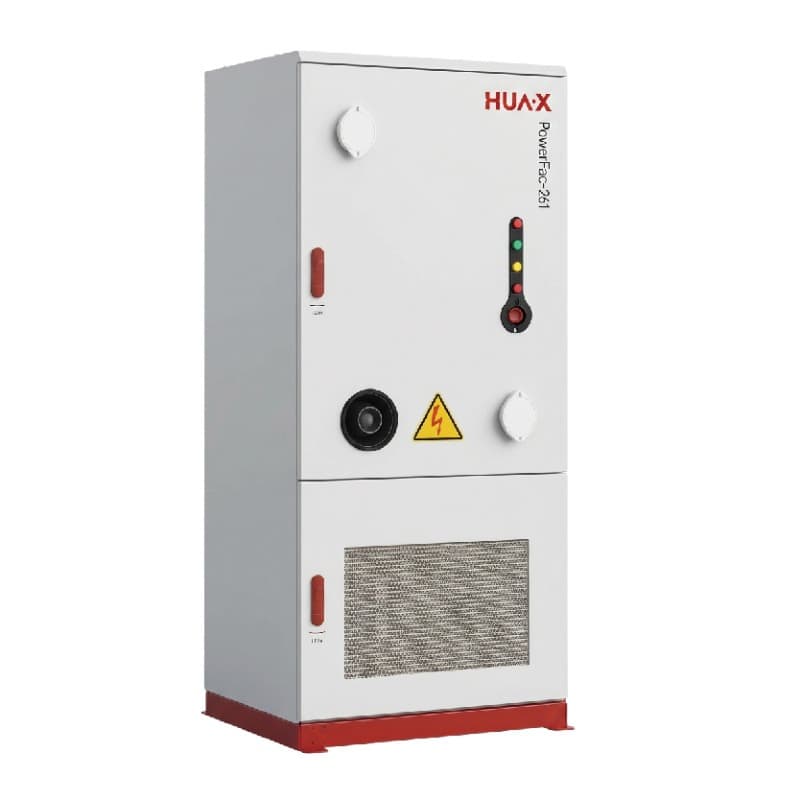
The supplied PowerFac-261 brochure lists 261 kWh nominal energy and 90% recommended depth of discharge. Multiplying those values gives 234.9 kWh arithmetically; it is not a documented guarantee of usable AC energy, and the recommended depth of discharge does not define every start/stop condition or life-stage assumption. Request a project-specific energy statement.
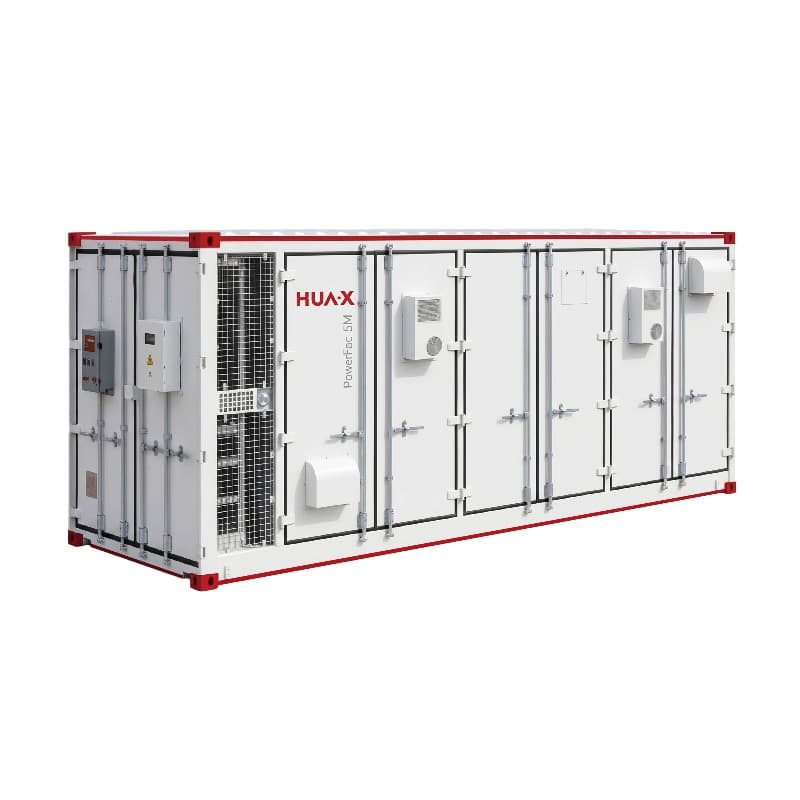
The supplied PowerFac-5M brochure lists 5,016 kWh nominal battery energy. It does not establish 5,016 kWh delivered at an AC site meter. The selected PCS, operating window, conversion losses, auxiliaries and site equipment must be defined separately; the brochure's ≤0.5P needs clarification rather than substitution with 0.5C.
Send the target net power, required duration, location, electrical interface and available load data with your RFQ. The C&I sizing guide shows how to work backward from a site's required output; the BESS RFQ Checklist covers the wider supply and acceptance scope.
References and further reading
These sources explain the technical background. Product performance, approvals, and installation requirements must be confirmed for the quoted system and project.
SAM: Battery Cell and System, Battery Bank Sizing — System Advisor Model (SAM)
Nominal and usable battery capacity, AC/DC quantities, conversion losses and ancillary-equipment consumption. Supports the measurement boundaries, not HUA-X product performance or warranty values.
SAM: Battery Dispatch, Charge Limits and Priority — System Advisor Model (SAM)
SOC limits relative to available capacity and the effect of capacity loss. This source does not establish HUA-X retention or warranty values.
C&I sizing guide — HUA-X
Related buyer guide for defining project inputs, energy boundaries and supply responsibilities.
PNNL GridPIQ: Energy Storage, Market Participation — Pacific Northwest National Laboratory
The round-trip efficiency definition includes charging and discharging over a defined boundary; it does not establish a one-way discharge efficiency.
PNNL: Protocol for Uniformly Measuring and Expressing the Performance of Energy Storage Systems — Pacific Northwest National Laboratory
The 2016 technical reference provides a framework for comparing storage performance under defined tests and duty cycles, not product certification or current project approval.
PowerFac-261 product and procurement brief — HUA-X
Published product record and procurement questions; nominal ratings do not establish usable AC energy or guaranteed duration.
Request a PowerFac-261 proposal — HUA-X
Send the project duty, site conditions and required measurement boundary for a configuration-specific proposal.
PowerFac-5M product and procurement brief — HUA-X
Published product record and procurement questions; nominal ratings do not establish usable AC energy or guaranteed duration.
Request a PowerFac-5M proposal — HUA-X
Send the project duty, site conditions and required measurement boundary for a configuration-specific proposal.
BESS RFQ Checklist — HUA-X
Related buyer guide for defining project inputs, energy boundaries and supply responsibilities.