
418 kWh nominal energy
Review this attribute together with the complete system, destination requirements, and operating conditions.
Response target: within 12 hours for project inquiries
energy storage
A liquid-cooled outdoor battery cabinet with 418 kWh nominal energy, 1331.2 V nominal DC voltage, and 314 Ah cell capacity.
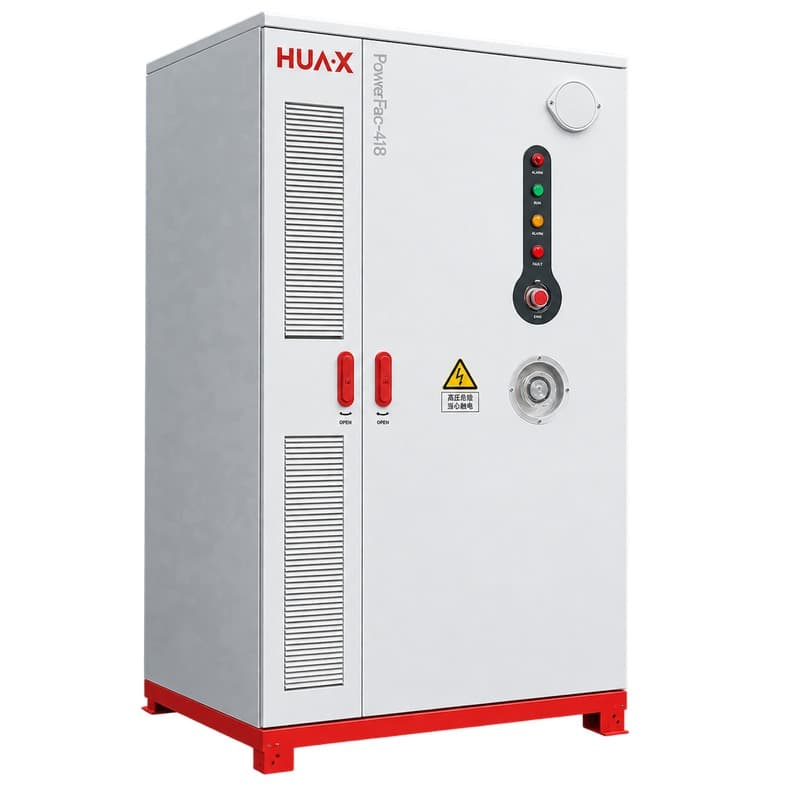
The cabinet is intended for higher-energy project architectures where thermal management, site layout, controls, and the paired power-conversion system are reviewed as one design.
Review this attribute together with the complete system, destination requirements, and operating conditions.
Review this attribute together with the complete system, destination requirements, and operating conditions.
Review this attribute together with the complete system, destination requirements, and operating conditions.
Review this attribute together with the complete system, destination requirements, and operating conditions.
| Parameter | Value | Condition or note |
|---|---|---|
| Nominal energy | 418 kWh | Confirm final operating conditions in the project proposal. |
| Nominal DC voltage | 1331.2 V | Confirm final operating conditions in the project proposal. |
| Cell capacity | 314 Ah | Confirm final operating conditions in the project proposal. |
| Thermal management | Liquid cooling | Confirm final operating conditions in the project proposal. |
| Enclosure rating | IP54 | Confirm final operating conditions in the project proposal. |
Validate the duty cycle, site, interfaces, and operating objective before confirming model suitability.
Validate the duty cycle, site, interfaces, and operating objective before confirming model suitability.
Validate the duty cycle, site, interfaces, and operating objective before confirming model suitability.
The product rating does not define a turnkey project scope. The quotation should identify who supplies, integrates, installs, commissions, and accepts each applicable item.
Use the public page and any available procurement brief for initial comparison. Request the applicable controlled data sheet, drawings, test or certificate evidence, and commercial documents for the exact quoted model and destination.
Air and liquid cooling are system-level choices. Compare heat density, temperature uniformity, ambient conditions, parasitic demand, acoustic limits, maintenance, fault response, and site layout—not capacity alone.
Read guide →A BESS safety review should connect cell and module behavior to electrical protection, BMS controls, thermal management, enclosure, fire strategy, emergency response, site layout, installation, and operating procedures.
Read guide →A useful BESS RFQ states the operating objective, site data, power, usable energy, duration, electrical interface, environment, safety requirements, scope split, documents, and acceptance criteria.
Read guide →Frequently asked questions
Answers cover the information needed to confirm configuration, operating conditions, documentation, price, and delivery.
Technical questions and quotation enquiries for this model.