By HUA-X
Published · Updated
Key takeaways
- Power in kW and energy in kWh answer different questions: how much demand can be supported, and for how long.
- Monthly bills alone do not show the timing and duration of site peaks.
- State the measurement point, operating window, conversion losses, auxiliary demand and capacity assumptions before comparing energy figures.
- Check recharge, controls and complete supply responsibilities before selecting a product.
1. Define the operating objective first
A storage system should have a ranked job: peak management, photovoltaic self-use, backup, charging support, grid service or a defined combination. Write a measurable success condition for each objective and identify conflicts, such as preserving backup reserve while dispatching for tariff savings.
Define normal, outage, maintenance and communication-failure modes. A battery's energy and power ratings do not establish its backup switching arrangement or islanded operating capability; those belong in the project design.
2. Collect the data that exposes the real load
Use timestamped site demand, generation and tariff data to identify how high the load becomes, how long it remains high and when charging is possible. Keep the time zone, interval length and missing periods visible. Use a resolution that captures the operating requirement and the applicable billing interval.
A dispatch model can check the proposed battery against time-varying targets and SOC limits. SAM's behind-the-meter documentation describes this approach; it also makes clear that capacity and operating constraints can prevent a target from being met. A single peak figure is therefore not a complete operating simulation.
Send the following with a sizing request:
- Interval site demand and energy, including operating schedules and unusual production days.
- Tariff periods, demand-charge rules, export limits and the required import limit, if applicable.
- Photovoltaic production, curtailment and surplus available after serving site loads.
- Critical loads, starting requirements and any outage objective.
- Connection voltage, transformer capacity, protection, available space, ambient conditions and altitude.
What does the dispatch model know in advance?
Ask whether the sizing study uses actual future load and solar generation, a previous-day profile or a forecast available to the proposed controller. A calculation with perfect knowledge of future demand does not establish live dispatch performance. Record the forecast source, horizon and update interval, then compare the forecast with the load and generation used to assess the result. Review when the grid-import target is exceeded, how SOC and backup reserve change, and whether charging can restore the required energy before the next dispatch. Request the assumptions and time-series results with the proposal.
| Request with the proposal | What it makes visible |
|---|---|
| Forecast basis, source, horizon and update interval | What information the calculation and proposed controller use before each decision. |
| Forecast and assessment traces with matching timestamps | Where the expected load or generation differs from the profile used to evaluate operation. |
| Grid import, target, battery dispatch and SOC on the same timeline | When the target is missed or reserve becomes a constraint. |
| Recharge window, limits and priority after discharge | Whether energy is restored before the next required duty. |
3. Separate power from energy duration
Discharge power must meet the controlled load at the agreed electrical boundary. Energy must cover the required dispatch profile at that boundary. Charging power and available charging hours must also restore the battery before the next required discharge.
For a constant net load, required net energy is power multiplied by time. For changing loads, add the required energy across the time intervals. Then account for the selected operating window, losses and capacity assumptions. Do not apply an SOC reduction again if a supplier's stated usable energy already includes that same SOC window.
4. Build the energy balance from documented site data
Use the site's recorded interval demand and the requested dispatch period to establish the net AC energy requirement. Identify the meter or electrical connection where this requirement applies. Keep the original time interval, units and operating dates with the calculation so another engineer can reproduce it.
Use configuration-specific evidence for the permitted operating window, discharge efficiency, auxiliary consumption and available capacity at the agreed assessment condition. If one of these inputs is missing, leave it unresolved in the sizing request instead of substituting a generic percentage. Do not deduct an allowance again when it is already included in the supplier's usable-energy figure.
Check energy and power separately
For a recorded interval with constant average power, interval energy is average power multiplied by interval duration. Add the required intervals at the same measurement point. Any conversion to nominal battery energy must state its data sources and electrical boundary; it is not a measured project result.
Check battery and PCS power capability separately against the actual dispatch requirement and site conditions. Keep auxiliary demand and any intervening equipment losses within their stated measurement boundaries. A sufficient energy rating alone does not demonstrate sufficient power.
5. Test the operating schedule and compare complete configurations
Check repeated dispatches, recharge windows, backup reserve and periods of low renewable output. Include charging and idle consumption in the daily energy balance. Tariff, demand, capital cost, operation and maintenance inputs would be needed for a separate financial assessment.
Compare proposals on the same duty and responsibility scope:
- Nominal energy, guaranteed usable energy and the exact measurement point.
- Continuous power and site derating, plus any specified short-duration overload duty.
- Operating window, life-stage requirement, thermal limits and auxiliary consumption.
- PCS, EMS, metering, communications, switchgear, transformer and fire-system interfaces.
- Installation, commissioning, service, exclusions and acceptance criteria.
6. Apply the questions to PowerFac-261 and PowerFac-5M
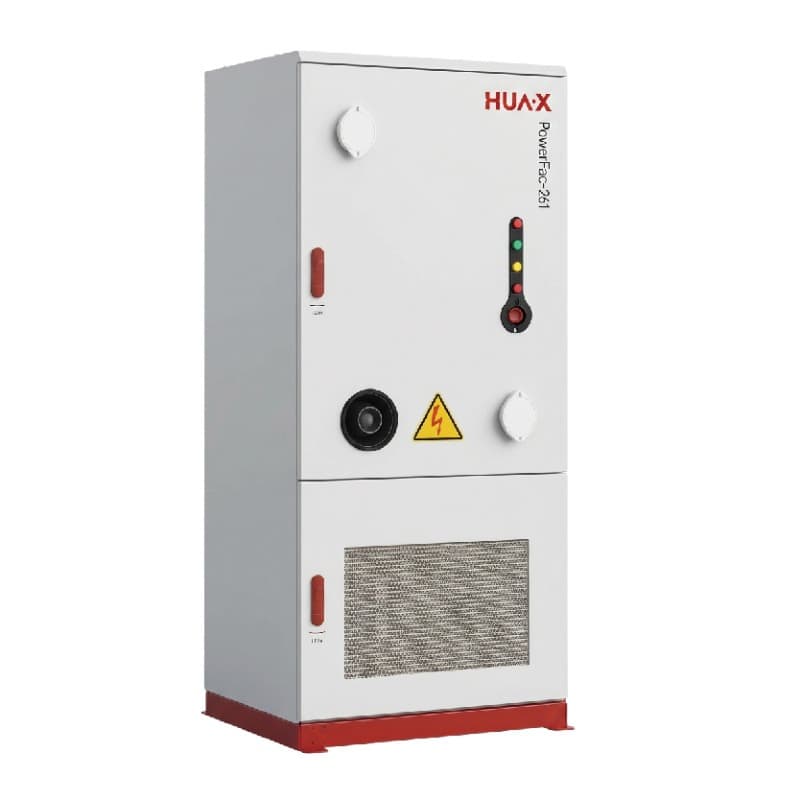
PowerFac-261 is listed in the supplied brochure as a 125 kW / 261 kWh liquid-cooled cabinet with an AC 400 V connection. Those nominal ratings are useful procurement inputs, but they do not prove that one cabinet meets the site's actual dispatch requirement. Request usable AC energy and power for the actual SOC window, temperature, altitude, auxiliary load and life-stage requirement.
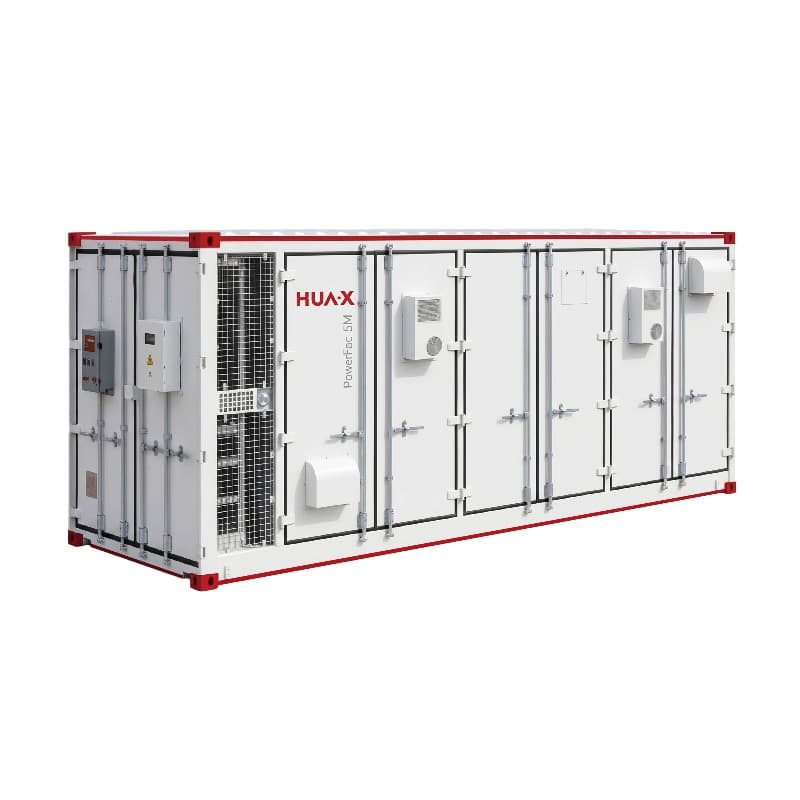
PowerFac-5M is listed as a battery container with 5,016 kWh nominal energy. A complete AC proposal must separately define the PCS and site interface. The brochure's ≤0.5P notation is not defined sufficiently to derive a guaranteed AC power or two-hour duration. Request its power basis and the full supply boundary.
For the measurement terms behind a proposal, continue with Nominal vs Usable Battery Energy. Use the BESS RFQ Checklist to assemble the operating data and equipment responsibilities.
References and further reading
These sources explain the technical background. Product performance, approvals, and installation requirements must be confirmed for the quoted system and project.
SAM: Battery Dispatch BTM — System Advisor Model (SAM)
Behind-the-meter dispatch targets, time-series inputs, SOC limits and capacity constraints. Distinguishes perfect foresight, previous-day data and custom forecasts. Supports the calculation method and disclosure of assumptions, not a project-specific sizing result or controller-performance guarantee.
SAM: Battery Cell and System, Battery Losses — System Advisor Model (SAM)
Nominal and usable battery capacity, AC/DC quantities, conversion losses and ancillary-equipment consumption. Supports the measurement boundaries, not HUA-X product performance or warranty values.
PowerFac-261 specifications and procurement questions — HUA-X
Published product record and procurement questions; nominal ratings do not establish usable AC energy or guaranteed duration.
PowerFac-261 procurement brief — HUA-X
Published procurement brief separating supplied brochure data from project-specific engineering questions.
Request a PowerFac-261 proposal — HUA-X
Send the project duty, site conditions and required measurement boundary for a configuration-specific proposal.
PowerFac-5M specifications and procurement questions — HUA-X
Published product record and procurement questions; nominal ratings do not establish usable AC energy or guaranteed duration.
PowerFac-5M procurement brief — HUA-X
Published procurement brief separating supplied brochure data from project-specific engineering questions.
Request a PowerFac-5M proposal — HUA-X
Send the project duty, site conditions and required measurement boundary for a configuration-specific proposal.
Nominal vs Usable Battery Energy — HUA-X
Related buyer guide for defining project inputs, energy boundaries and supply responsibilities.
BESS RFQ Checklist — HUA-X
Related buyer guide for defining project inputs, energy boundaries and supply responsibilities.