
15.36 kWh nominal system energy
Review this attribute together with the complete system, destination requirements, and operating conditions.
Response target: within 12 hours for project inquiries
solar storage
A three-module high-voltage stacked LFP home battery system with 15.36 kWh nominal energy, 153.6 V nominal system voltage, and IP54 enclosure rating.
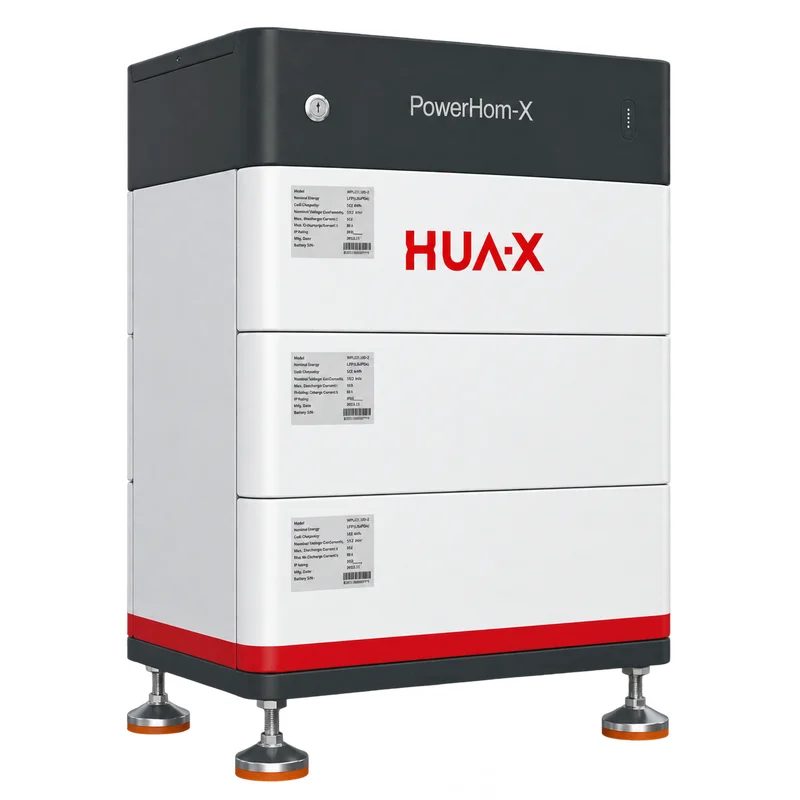
PowerHom-X is a modular high-voltage battery architecture for residential photovoltaic self-use and selected backup loads. Final selection depends on the approved inverter, operating-voltage window, module topology, essential-load plan, and installation conditions.
Review this attribute together with the complete system, destination requirements, and operating conditions.
Review this attribute together with the complete system, destination requirements, and operating conditions.
Review this attribute together with the complete system, destination requirements, and operating conditions.
Review this attribute together with the complete system, destination requirements, and operating conditions.
| Parameter | Value | Condition or note |
|---|---|---|
| Model | HZF-51.2-100-SI | Confirm final operating conditions in the project proposal. |
| Battery chemistry | LFP | Confirm final operating conditions in the project proposal. |
| Standard configuration | 3 × 51.2 V / 100 Ah battery modules | Confirm final operating conditions in the project proposal. |
| Nominal system voltage | 153.6 V | Confirm final operating conditions in the project proposal. |
| Nominal system energy | 15.36 kWh | Confirm final operating conditions in the project proposal. |
| System operating voltage | 129.6–175.2 V | Confirm final operating conditions in the project proposal. |
| Maximum continuous charge / discharge current | 50 A at 25 ± 3 °C | Confirm final operating conditions in the project proposal. |
| Communications | CAN / RS485 | Confirm final operating conditions in the project proposal. |
| Remote monitoring | Wi-Fi module | Confirm final operating conditions in the project proposal. |
| Enclosure rating | IP54 | Confirm final operating conditions in the project proposal. |
| Published altitude range | 0–3000 m | Confirm final operating conditions in the project proposal. |
| Battery-module dimensions | 660 × 400 × 180 mm | Confirm final operating conditions in the project proposal. |
| Operating temperature | Charge 0–45 °C; discharge -10–60 °C | Confirm final operating conditions in the project proposal. |
Validate the duty cycle, site, interfaces, and operating objective before confirming model suitability.
Validate the duty cycle, site, interfaces, and operating objective before confirming model suitability.
Validate the duty cycle, site, interfaces, and operating objective before confirming model suitability.
The product rating does not define a turnkey project scope. The quotation should identify who supplies, integrates, installs, commissions, and accepts each applicable item.
Use the public page and any available procurement brief for initial comparison. Request the applicable controlled data sheet, drawings, test or certificate evidence, and commercial documents for the exact quoted model and destination.
Size a home battery from the loads that must run, their coincident and starting power, required backup hours, usable-energy assumptions, recharge opportunity, and the inverter's supported battery configuration.
Read guide →Rack, stacked, and wall-mounted batteries mainly differ in mechanical format, expansion method, service access, footprint, cable routing, and integration. Energy needs and inverter compatibility remain the first filters.
Read guide →A solar battery is worth evaluating when it supports a defined objective that can be modeled from interval loads, solar production, outage needs, export limits, tariffs, and operating constraints.
Read guide →Frequently asked questions
Answers cover the information needed to confirm configuration, operating conditions, documentation, price, and delivery.
The inquiry keeps this product context attached, so the receiving team can see which specifications and application triggered the request.