By HUA-X
Published · Updated
Key takeaways
- Installation format does not replace electrical compatibility checks.
- Rack systems emphasize organized equipment and service access.
- Stacked systems use defined modular increments and require a stable complete assembly.
- Wall-mounted systems preserve floor space but require suitable structure and clearances.
Start with the requirements common to all three formats
Before comparing enclosures, confirm required usable energy, maximum power, inverter voltage, charge settings, communications, supported module count, indoor or outdoor location, and applicable installation rules.
- Critical-load power, energy, surge, and autonomy
- Inverter and communications compatibility
- Charge and discharge limits and protection
- Temperature, environment, clearances, and service plan
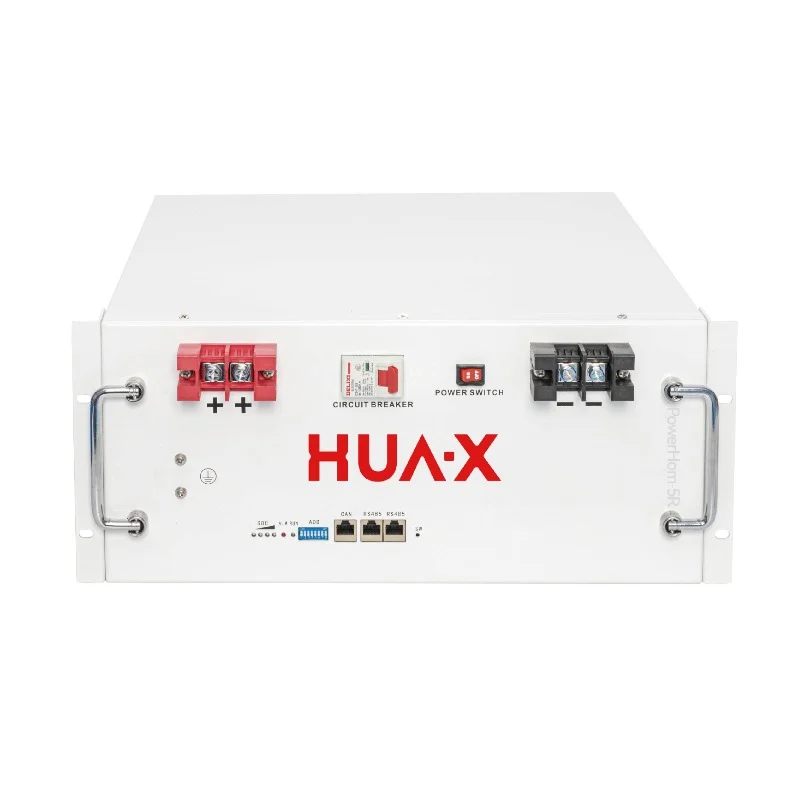
Rack-mounted: PowerHom-5R starting point
Rack format can organize modules, protection, cables and monitoring in a dedicated equipment area. PowerHom-5R is published as a 51.2 V / 100 Ah / 5.12 kWh LFP battery with cabinet-style rack installation, CAN/RS485, IP20 enclosure, dimensions of 197 × 460 × 440 mm and approximate mass of 45 kg.
- Useful where a dedicated equipment room or cabinet is available
- Can simplify module access and organized DC distribution
- Requires rack, restraint, floor loading, and service-space planning
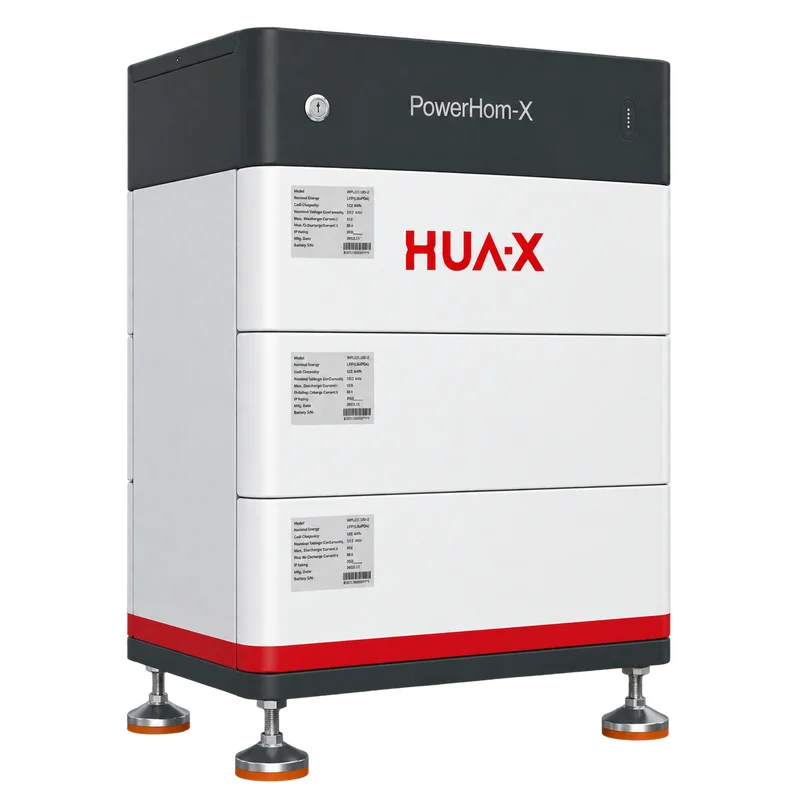
Stacked: PowerHom-X starting point
Stacked systems package modules into a floor-standing assembly. PowerHom-X is published as a three-module high-voltage system with 153.6 V nominal system voltage, 15.36 kWh nominal energy, CAN/RS485, Wi-Fi monitoring and an IP54 enclosure rating.
- Capacity changes in defined module increments
- Compact floor footprint when the complete stack fits the space
- Mechanical stability and approved stack limits are essential
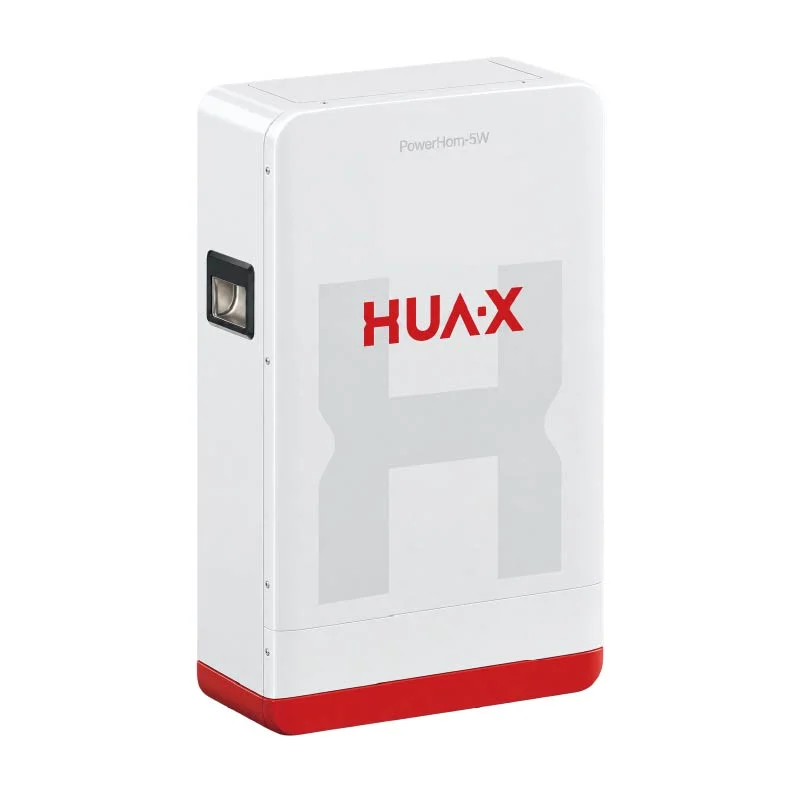
Wall-mounted: PowerHom-5W starting point
Wall mounting can preserve floor space, but the selected wall, fasteners, installed mass, clearances, cable route, service access and environment must support the exact model. PowerHom-5W is published as a 51.2 V / 100 Ah / 5.12 kWh LFP battery with CAN/RS485, IP20 enclosure, dimensions of 600 × 450 × 212 mm and approximate mass of 53 kg.
- Suitable where structural support and safe wall clearances are available
- Can reduce floor-space use and simplify a clean residential layout
- Requires structural, fastening, weight, access, and cable review
Choose the format after the electrical architecture
Use the same load, usable-energy requirement, inverter, environment and service assumptions for all formats. A compact enclosure is not a substitute for compatible voltage, communications, charge settings, discharge power, protection and an approved module topology.
- Choose rack format when an equipment rack or cabinet and organized service access are priorities.
- Choose a stacked system when the approved high-voltage architecture and complete floor-standing assembly suit the inverter and site.
- Choose wall format when structural support and safe wall clearances are available and floor space is constrained.
- Confirm warranty, compliance documents, cables, protection, monitoring, installation, commissioning and exclusions in the quotation.
References and further reading
These sources explain the technical background. Product performance, approvals, and installation requirements must be confirmed for the quoted system and project.
PowerHom-5R rack-mounted home battery — HUA-X
Published HZF-51.2-100-SA rack-format specifications and procurement questions.
PowerHom-X high-voltage stacked home battery — HUA-X
PowerHom-X system voltage, nominal energy, enclosure rating and communications interfaces.
PowerHom-5W wall-mounted home battery — HUA-X
Published HZF-51.2-100-SB wall-format specifications and procurement questions.
SAM: Battery Storage — Behind the Meter — System Advisor Model (SAM)
Technical background for voltage, capacity, battery-bank sizing, power conversion, losses and thermal inputs.