
HUA-X battery project reference / Pilbara, Western Australia
Battery Storage Cuts Diesel Use at a Remote Pilbara Exploration Camp
A remote Western Australian camp combined 418 kWh of battery storage with a 215 kW AC system, cutting diesel consumption by 46% and reducing solar curtailment from 31% to 6%.
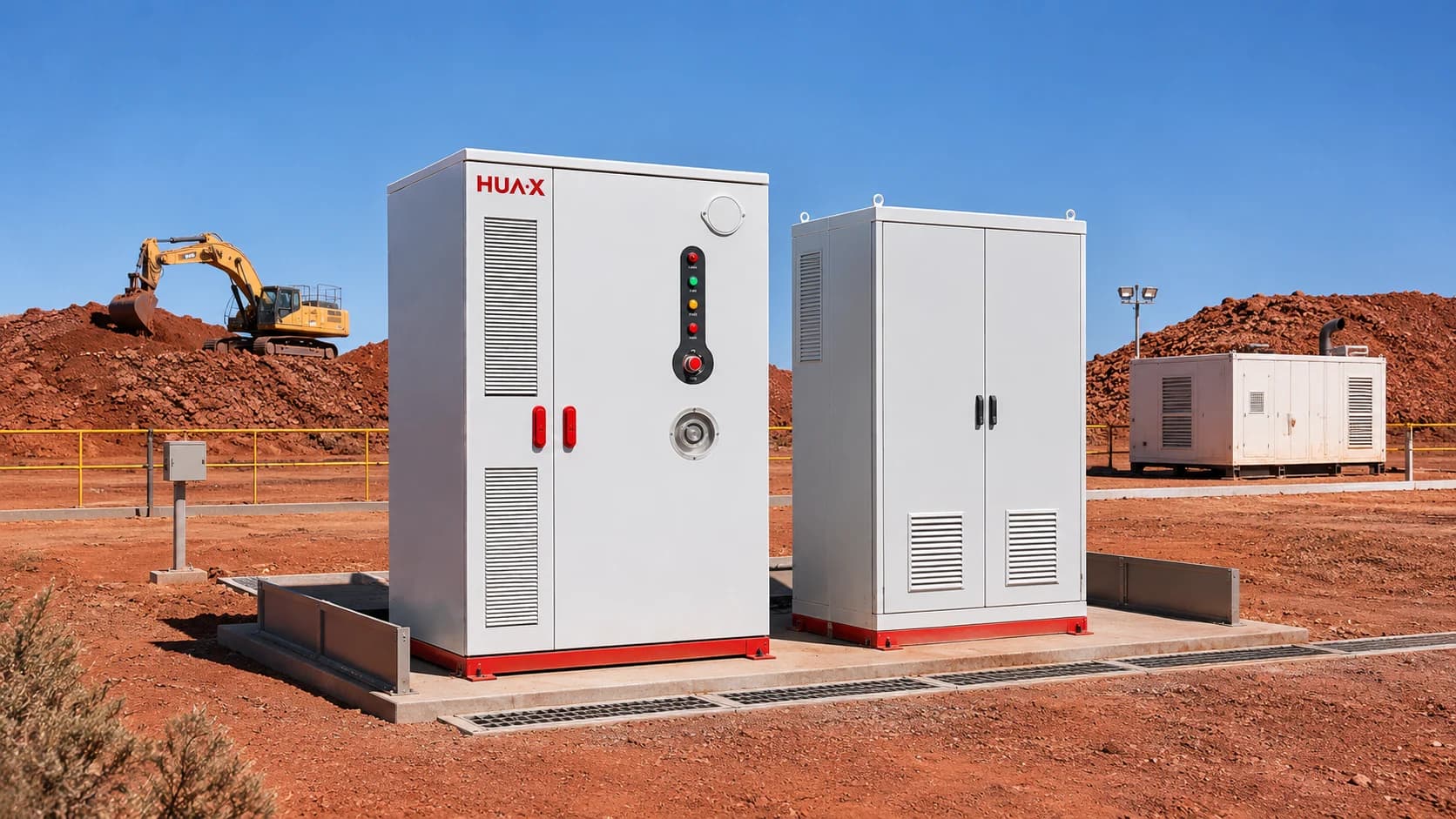
A camp beyond the electricity grid
An exploration camp in the Pilbara region relied on two 250 kVA diesel generators, with the nearest grid connection more than 100 km away. Diesel delivered to the site cost A$1.85 per litre, and annual generation expenditure reached A$420,000.
The camp already had solar generation, but generator minimum-load constraints caused roughly a third of the available solar energy to be curtailed. Adding more generation alone would not resolve that operating constraint.
Coordinating solar, storage and generators
The project added 418 kWh of DC battery storage with a 215 kW AC conversion system. During the day, solar supplied the camp and charged the battery with surplus generation. Storage allowed the generators to stop when demand would otherwise push them below their suitable loading range, and it supplied evening loads before generator operation resumed.
The equipment operated in ambient temperatures reaching 45°C, dust and day–night temperature swings of 20°C. Liquid cooling maintained cell-temperature differences within 3°C during the project operation.
Less fuel and better use of solar energy
Diesel consumption fell by 46%, delivering annual savings of approximately A$193,000. Solar curtailment dropped from 31% to 6%. After 14 months, battery state of health was 98.2%.
The equipment was shipped through Port Hedland and transported a further 600 km by road. On-site lifting and placement were completed in three days. The principal benefit came from changing the operating relationship between the generators, solar array and camp load.
Project FAQ
Questions about this project reference
Configuration, application and operating conditions for this project.
Why did storage reduce both diesel consumption and solar curtailment?
Does the 418 kWh cabinet include the complete 215 kW AC system?
Can the same diesel savings be expected at another off-grid camp?
Plan a similar battery project
Discuss storage for a remote solar-diesel microgrid
Share the application, destination, operating requirements, quantity and schedule to discuss a configuration for your project.
Response target: within 12 hours. Supply scope, documents, lead time and warranty are confirmed with the quotation.