
HUA-X battery project reference / Funabashi, Chiba, Japan
Stacked Storage Supports an All-Electric Home in Chiba
A new all-electric home in Funabashi combined a 15.36 kWh high-voltage battery stack with 5.2 kWp of solar, reducing annual grid purchases from 6,800 kWh to 2,900 kWh.
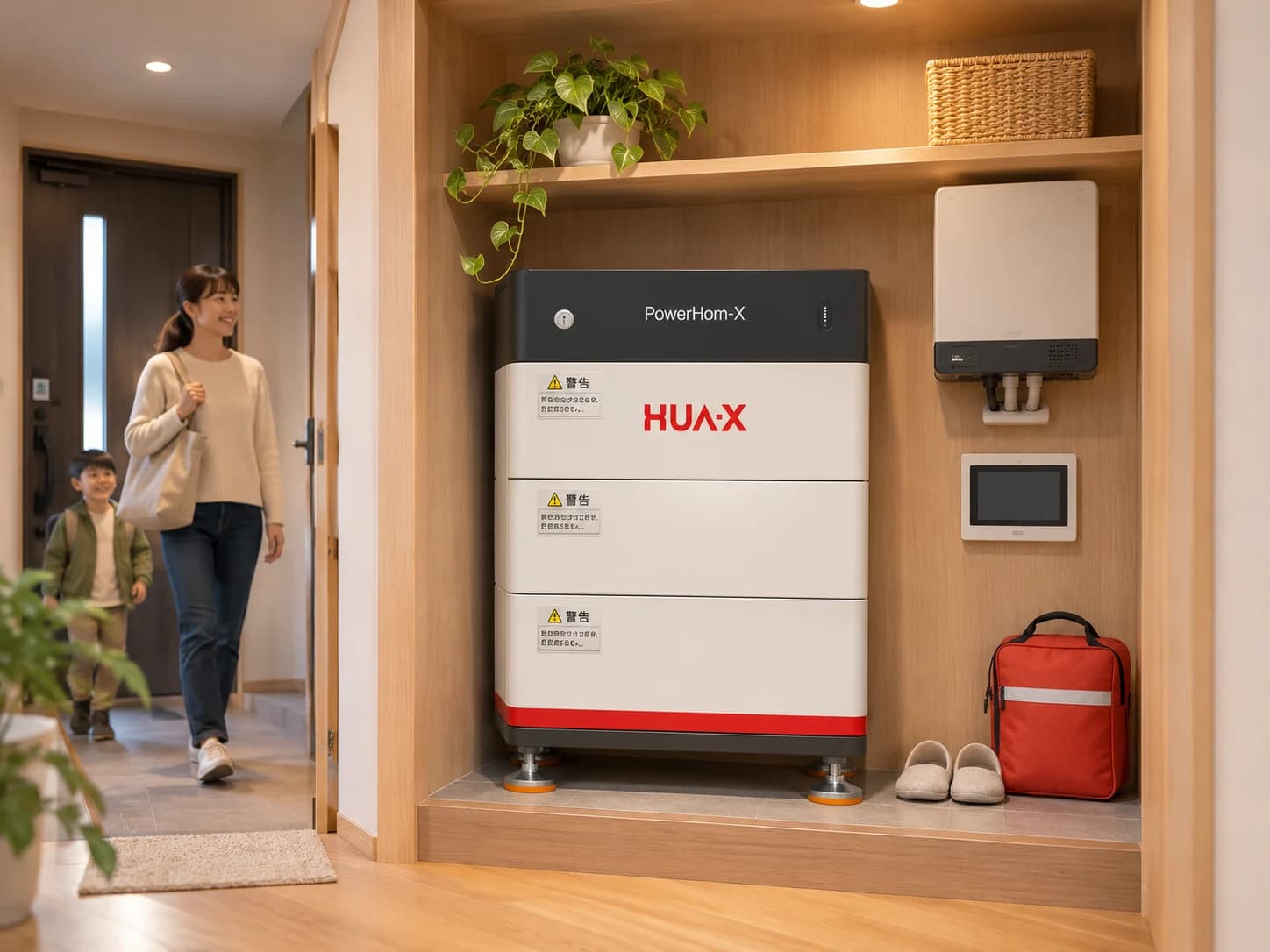
Storage planned into a new home
A new two-storey, 120 m² home in Funabashi used an all-electric design. The owner wanted both everyday energy-cost management and a defined supply for essential loads during a disaster-related outage.
The project combined 5.2 kWp of rooftop solar with a 15.36 kWh high-voltage battery stack. Three 51.2 V, 100 Ah modules were installed in an equipment recess near the entrance, using a 660 × 400 mm footprint.
Daily operation and a separate backup function
The stack used quick-connect terminals and CAN/RS-485 communication. In normal operation, solar generation and time-of-use charging worked with the home's daytime and nighttime electricity rates of JPY 32 and JPY 16 per kWh.
The configured backup arrangement provided a 100 V independent output for selected loads, including refrigeration, lighting, phone charging and a rice cooker. This separated the essential-load objective from the home's full electrical demand.
Lower purchases and careful physical integration
Annual purchased electricity fell from 6,800 kWh to 2,900 kWh, with annual savings of approximately JPY 110,000. The installation was coordinated with the equipment-recess dimensions, conduit positions and labelling arrangement of the new house.
The case highlights the value of planning battery space and electrical integration during construction. Energy storage became part of the home's layout and operating strategy rather than a freestanding appliance added after the building was finished.
Project FAQ
Questions about this project reference
Configuration, application and operating conditions for this project.
How is the battery's high-voltage DC system related to the 100 V backup output?
Why was the storage layout planned during construction?
Can 15.36 kWh support an all-electric home for several days?
Plan a similar battery project
Discuss stacked storage for an all-electric home
Share the application, destination, operating requirements, quantity and schedule to discuss a configuration for your project.
Response target: within 12 hours. Supply scope, documents, lead time and warranty are confirmed with the quotation.