
HUA-X battery project reference / Near Ingolstadt, Bavaria, Germany
Storage Reduces Peak Demand at a Bavarian Automotive-Parts Factory
A Bavarian stamping plant used a PowerFac 250 kW / 522 kWh system to reduce maximum demand from 1.42 MW to 1.19 MW and combine demand savings with daily energy shifting.
Short production peaks with a lasting cost
Three 800-tonne presses created sharp load changes at an automotive-parts plant near Ingolstadt. Maximum demand reached 1.42 MW. With an annual power-charge rate of approximately €118 per kW, the cost of these peaks continued to affect the bill beyond the production event itself.
The plant needed a system that could respond to changes in factory load and also shift energy between lower- and higher-price periods.
Load-following power with a 522 kWh battery
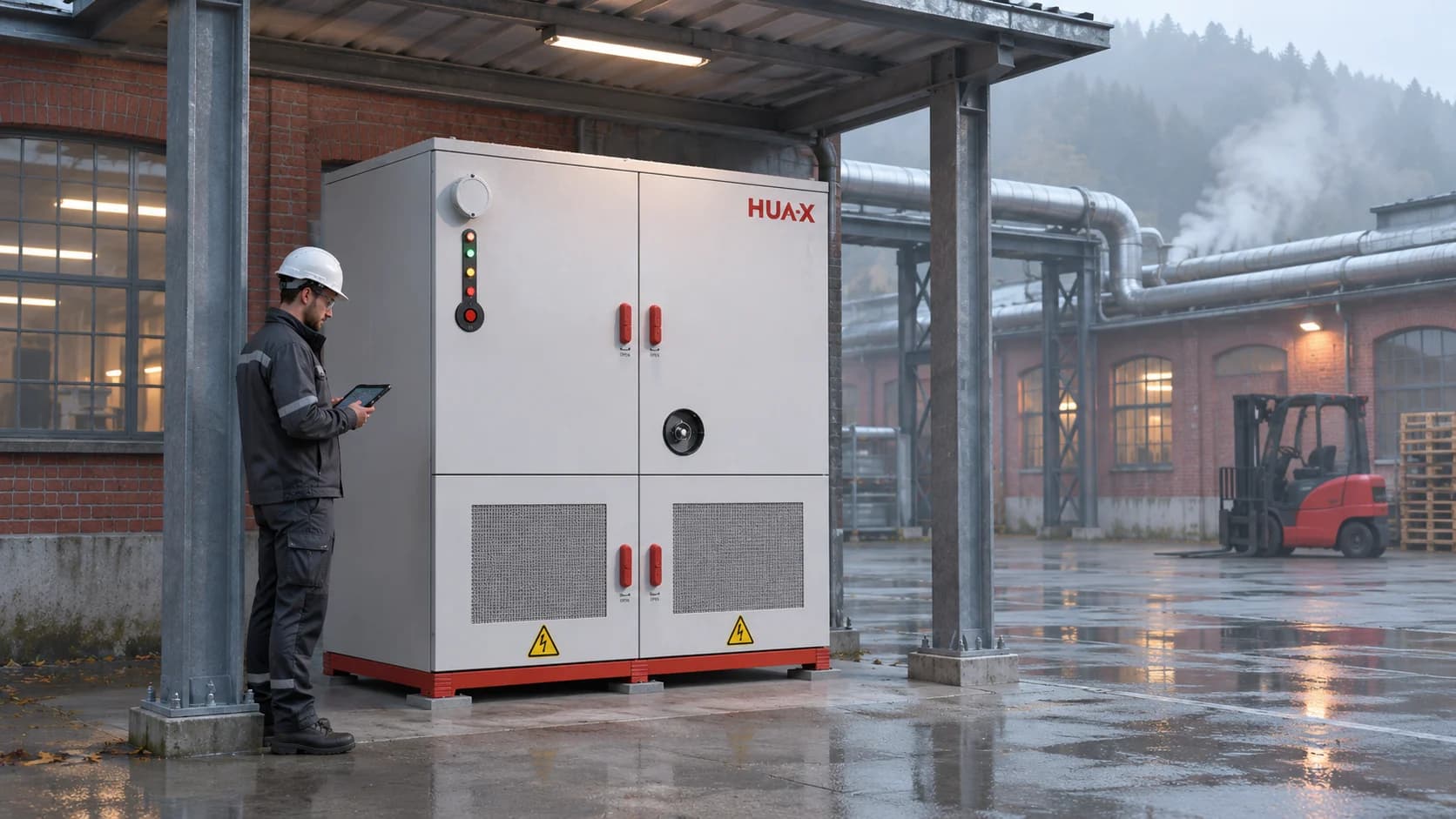
A liquid-cooled PowerFac 250 kW / 522 kWh system was installed with two-level battery management and active balancing. The PCS followed the plant load to reduce peaks, bringing maximum demand down to 1.19 MW.
The system also operated across electricity-price periods of €0.19 and €0.31 per kWh. The project used one daily energy-shifting cycle on approximately 250 working days a year.
Factory-specific economics
Demand-charge savings reached approximately €27,000 a year. Energy shifting contributed around €58 per working day, or €14,500 annually. The equipment cost €68,000 landed, with installation and commissioning bringing total investment to €79,000; the resulting simple-payback estimate was 1.9 years.
Preparation of the project's grid-connection and supporting documentation took seven months. Grid connection was therefore a significant part of the schedule alongside equipment procurement and site work.
Project FAQ
Questions about this project reference
Configuration, application and operating conditions for this project.
Why did the stamping plant need both power and energy capacity?
What supports the project's 1.9-year simple-payback estimate?
Why was grid connection a significant part of the schedule?
Plan a similar battery project
Discuss demand management for an industrial production line
Share the application, destination, operating requirements, quantity and schedule to discuss a configuration for your project.
Response target: within 12 hours. Supply scope, documents, lead time and warranty are confirmed with the quotation.