
HUA-X battery project reference / Vancouver Island, British Columbia, Canada
Lithium Batteries Simplify Seasonal Cart Operation on Vancouver Island
A Vancouver Island resort converted 24 carts to 5.4 kWh lithium packs, combining lighter batteries with low self-discharge and additional protection for the coastal installation.
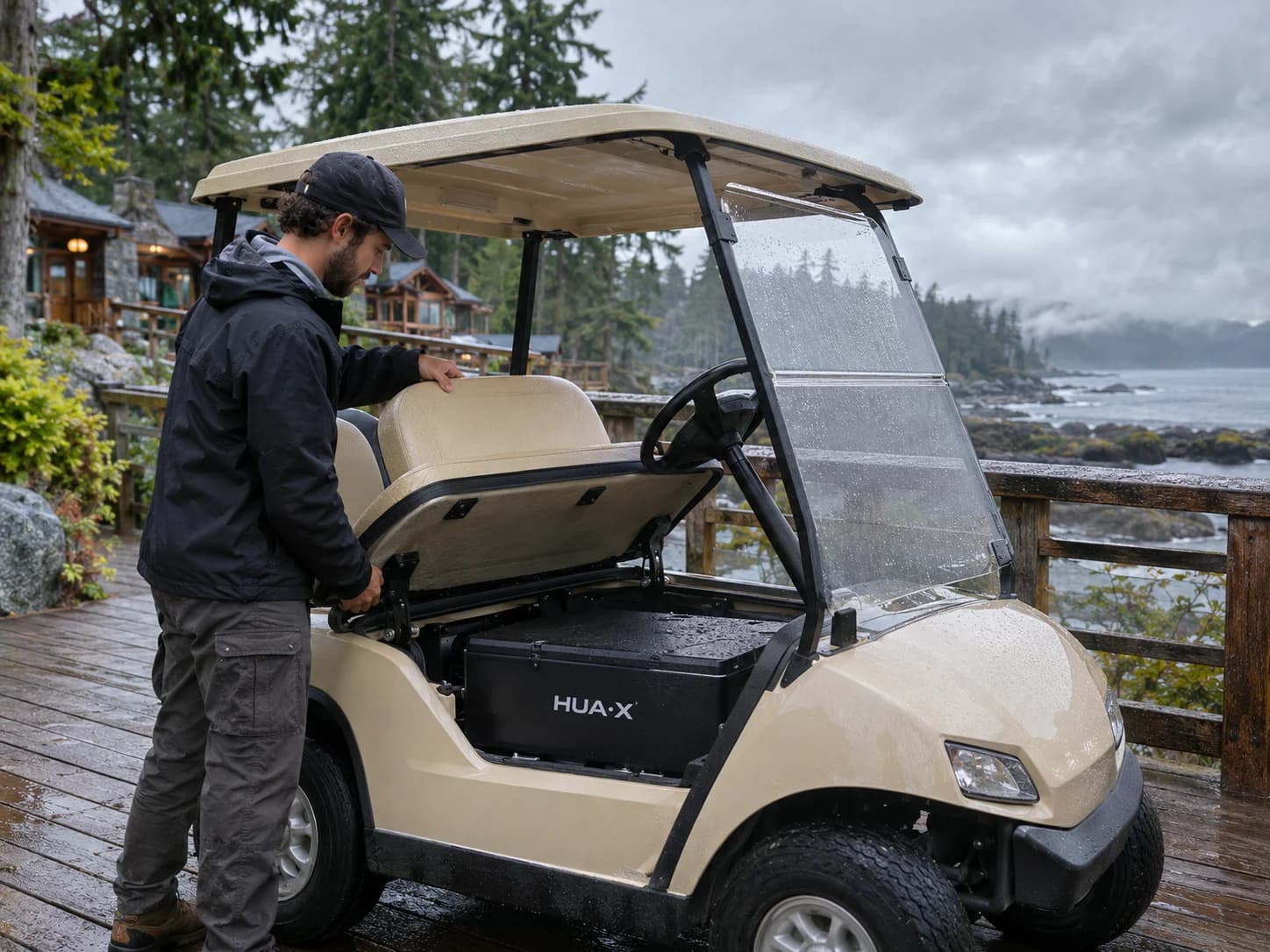
A fleet used lightly but exposed year-round
A seaside resort on Vancouver Island used its carts for approximately 8 km a day. Winter use was lower, but the vehicles remained exposed to moisture, salt and cold conditions. The former lead-acid batteries suffered from low state of charge during the quiet season.
The conversion focused on reliable seasonal storage and everyday convenience rather than extending a high-mileage route.
Battery storage and coastal protection
The resort installed 51.2 V, 105 Ah lithium packs with approximately 5.4 kWh of energy. In its operating pattern, the carts required charging about once a week. The battery mass reduction was 220 kg per cart.
The project specified low-temperature charging protection and additional protective coating for the coastal environment. The coating option cost US$28 per unit. Recorded self-discharge was 3% over six months of storage.
Results through the seasonal cycle
The purchase price was CAD 1,980 per pack, or CAD 47,520 for 24 units. After two years, the project inspection found no terminal oxidation.
The customer's lifecycle comparison used an eight-year lithium service-life basis against three years for the previous batteries, projecting a 42% lower annualised cost. That comparison complemented the operational benefits already observed: less frequent charging, reduced mass and a simpler return to service after seasonal storage.
Project FAQ
Questions about this project reference
Configuration, application and operating conditions for this project.
Does six-month self-discharge performance remove the need for seasonal battery care?
Was the eight-year lithium life already demonstrated by this project?
Plan a similar battery project
Discuss batteries for a seasonal resort fleet
Share the application, destination, operating requirements, quantity and schedule to discuss a configuration for your project.
Response target: within 12 hours. Supply scope, documents, lead time and warranty are confirmed with the quotation.