
HUA-X battery project reference / Tasmania, Australia
Portable Storage Reduces the Equipment Load for Tasmanian Fieldwork
A Tasmanian ecology team replaced 28 kg lead-acid-and-inverter sets with 12 kg portable units, purchasing eight 1 kWh systems for remote monitoring and field-camp equipment.
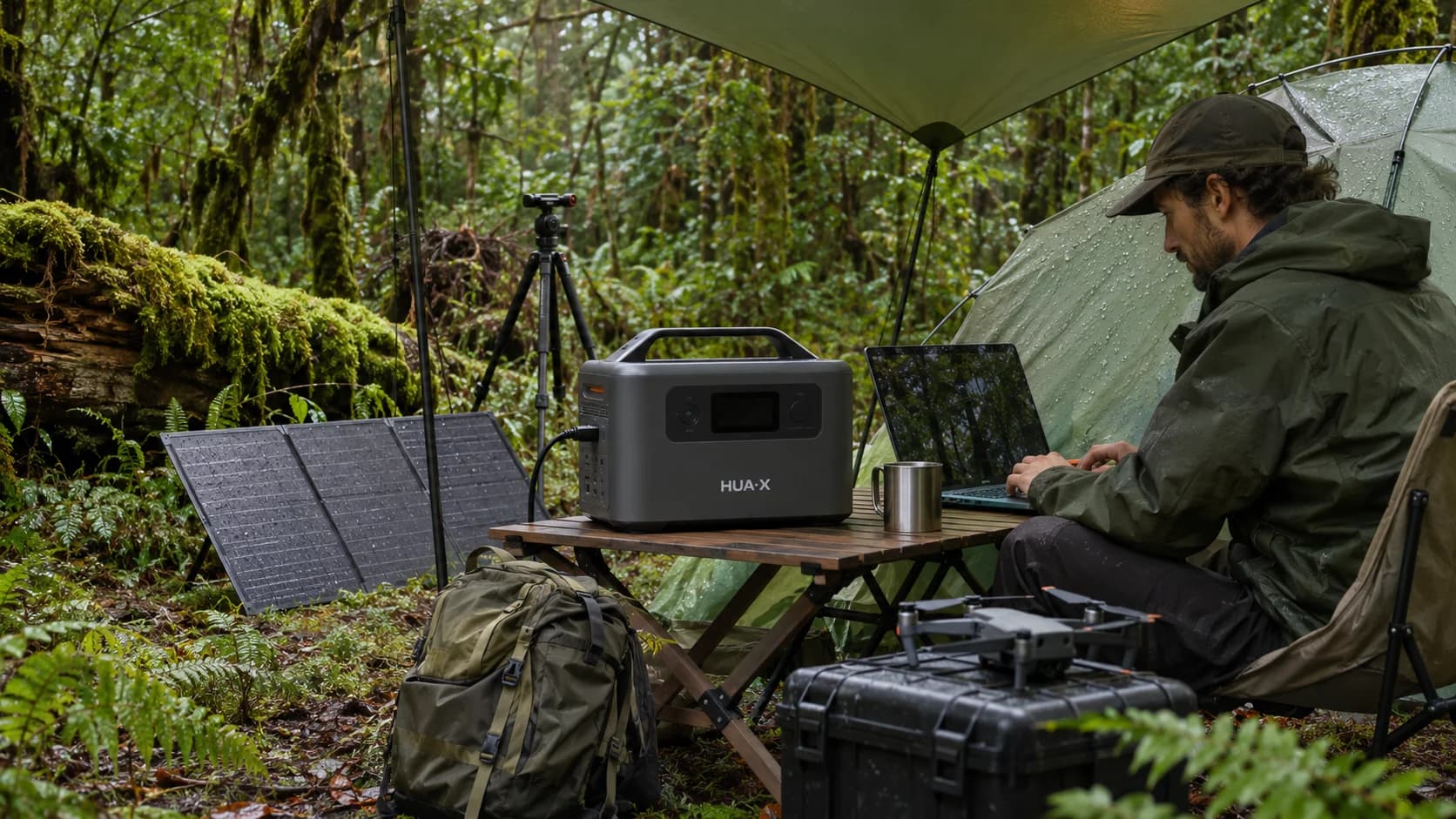
Energy equipment had to travel with the team
An ecology team in Tasmania spent up to two weeks at a time in the field, using equipment including cameras, laptops, a satellite terminal and drone batteries. Its previous lead-acid battery and inverter arrangement weighed 28 kg, creating a substantial transport burden on remote trips.
The team selected a compact portable unit so the battery and conversion equipment could move with the field equipment as one package.
A 1 kWh source for equipment charging
Each replacement unit stored 1 kWh and provided 1,000 W of output at a mass of 12 kg. The team's equipment mix included six drone batteries, two laptops and a satellite terminal. Lower-power camp loads, such as a 60 W electric-blanket setting, were also within the project's intended use.
The units operated in wet, cool conditions, including nights at −2°C. IP54 protection was specified for the equipment, with the portable units kept within the field-camp arrangement.
A more manageable field-power package
The team purchased eight units at A$890 each. The reduction from 28 kg to 12 kg per set made the power equipment easier to carry alongside monitoring instruments.
The complete portable package determined how readily the team could use it. For a field team, battery capacity, output rating and mass all compete with the amount of equipment that can be transported to the working location.
Project FAQ
Questions about this project reference
Configuration, application and operating conditions for this project.
Did a 1 kWh unit provide two weeks of power without recharging?
Does IP54 allow the unit to sit unprotected in heavy rain?
Plan a similar battery project
Discuss portable power for field monitoring equipment
Share the application, destination, operating requirements, quantity and schedule to discuss a configuration for your project.
Response target: within 12 hours. Supply scope, documents, lead time and warranty are confirmed with the quotation.