
HUA-X battery project reference / Surabaya, East Java, Indonesia
Lithium Packs Support Two Daily Delivery Peaks in Surabaya
A central kitchen converted 36 delivery tricycles to 7.68 kWh lithium packs, extending its delivery radius from 18 km to 30 km and retaining 94% battery capacity after one year.
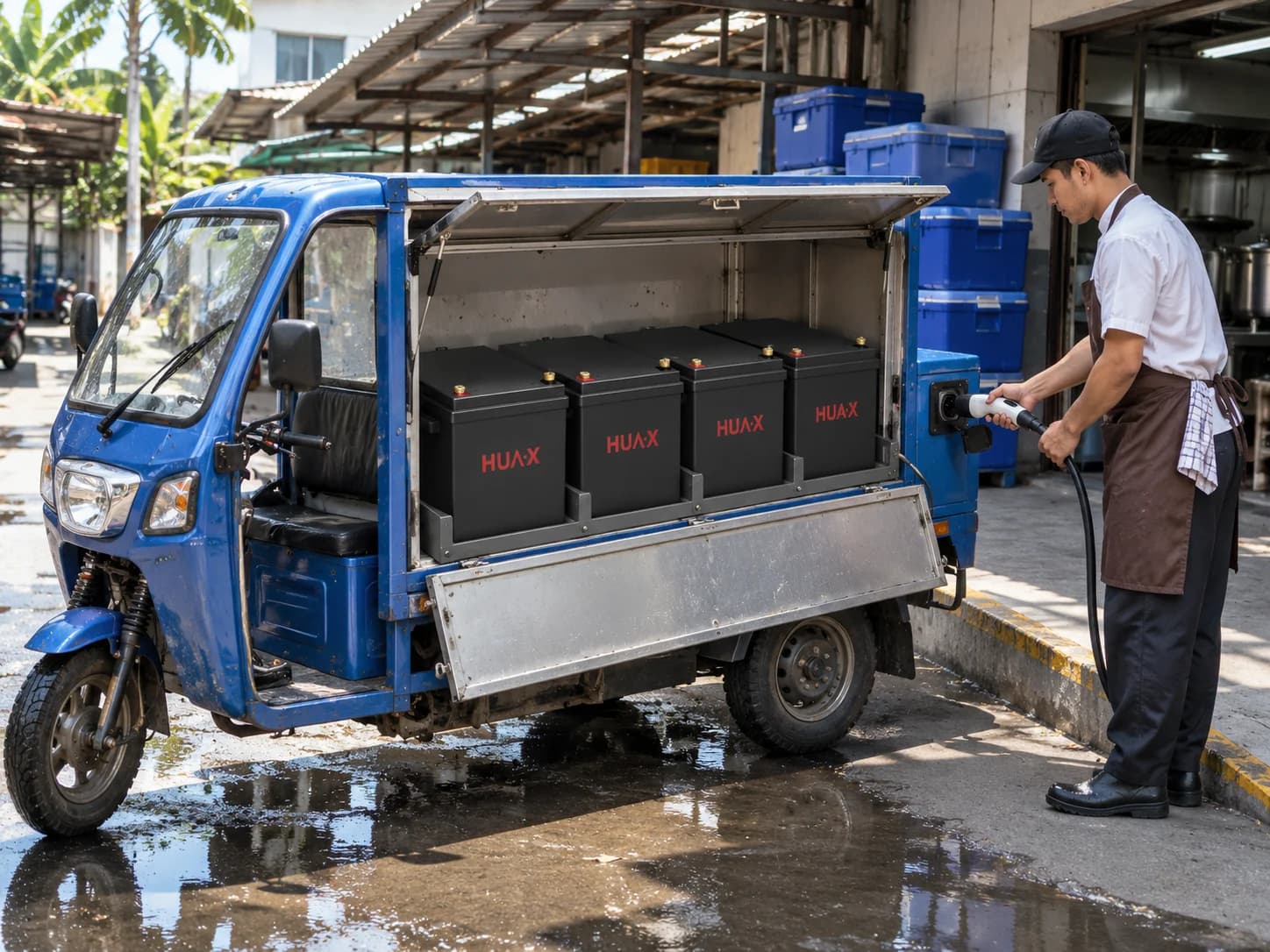
Keeping vehicles available for lunch and dinner
A central kitchen in Surabaya electrified its 36 delivery tricycles in early 2025. Its previous lead-acid groups required replacement every eight months. A four-battery group cost IDR 4.8 million, and replacement expenditure across the fleet reached approximately IDR 260 million a year.
The vehicles had to serve two concentrated demand periods. A useful conversion needed enough range for the delivery area and a charging schedule that fitted between the lunch and evening peaks.
Capacity, payload and a visible state of charge
Each tricycle received four HZF-12.8-150-SA batteries, forming a 51.2 V, 7.68 kWh group. At 76 kg, the lithium group was 118 kg lighter than the previous installation, allowing six additional food crates to be carried.
The customer selected the Bluetooth version with a state-of-charge display. Drivers could see the remaining charge instead of estimating it from vehicle behaviour. A three-hour top-up between service peaks fitted the kitchen's operating pattern.
A wider delivery area
The delivery radius increased from 18 km to 30 km. After a year of operation in conditions reaching 34°C and 80% humidity, the batteries retained 94% capacity. The project used IP54 ABS enclosures.
The 36 sets were supplied in two batches at US$1,140 per set. Fleet identification numbers were added from the second batch, making individual packs easier to identify within the customer's operation.
Project FAQ
Questions about this project reference
Configuration, application and operating conditions for this project.
How did the battery change improve the delivery operation?
How did charging fit between the delivery peaks?
What did the Bluetooth option add?
Plan a similar battery project
Plan batteries around your delivery routes and charging breaks
Share the application, destination, operating requirements, quantity and schedule to discuss a configuration for your project.
Response target: within 12 hours. Supply scope, documents, lead time and warranty are confirmed with the quotation.