
HUA-X battery project reference / São Paulo, Brazil
A Two-Battery Lithium Pack Extends Neighbourhood Delivery Range in São Paulo
A São Paulo delivery operator replaced four lead-acid batteries with two 25.6 V lithium units, achieving 92 km under a 400 kg load and placing a larger repeat order the following year.
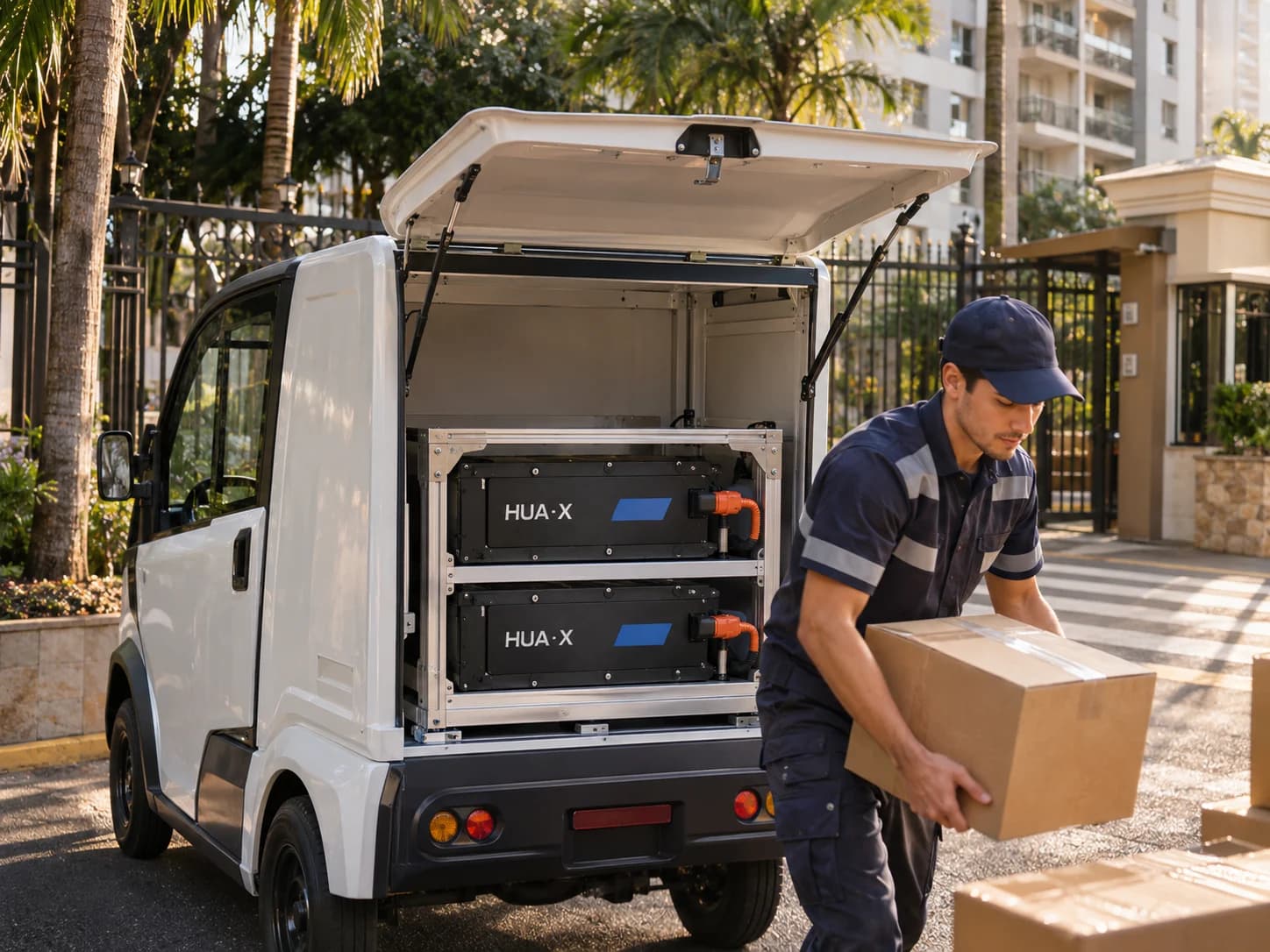
The last kilometre inside residential communities
A São Paulo operator used low-speed four-wheel vehicles to carry community-shopping orders from local delivery points to residential buildings. The existing four-battery lead-acid arrangement had a nominal 9.6 kWh rating, but vehicles reached their low-battery warning after approximately 55 km.
Replacement cost was another concern. The imported lead-acid groups cost US$1,180 landed and lasted around 14 months in the operation.
Fewer battery units and lower installed mass
The operator selected two HZF-25.6-200-SA lithium batteries in series, giving 51.2 V and 10.24 kWh. The combined mass was 77.6 kg, reducing the battery load by 152 kg.
Using two higher-voltage units reduced the number of separate battery units and interconnecting leads in the vehicle. This made the arrangement simpler for a fleet supported by limited local maintenance resources.
Range and repeat procurement
The lithium configuration achieved 92 km of tested range while carrying 400 kg. The initial 60 sets were purchased at US$1,290 per set.
The customer ordered a further 180 sets the following year and added Bluetooth-enabled versions for visibility of state of charge and cycle count. The repeat order extended the conversion beyond the first group of vehicles while retaining the same two-unit electrical architecture.
Project FAQ
Questions about this project reference
Configuration, application and operating conditions for this project.
Why did this vehicle use two 25.6 V batteries?
What does the 92 km result tell a delivery-fleet buyer?
Plan a similar battery project
Discuss a battery conversion for low-speed delivery vehicles
Share the application, destination, operating requirements, quantity and schedule to discuss a configuration for your project.
Response target: within 12 hours. Supply scope, documents, lead time and warranty are confirmed with the quotation.