
HUA-X battery project reference / Based in Poznań, Poland
Auxiliary Lithium Storage Supports Cross-Border Truck Rest Periods
A truck on the Poland–Germany–Netherlands route used two lithium groups for overnight cab loads, with eight hours of winter heating and ten hours of summer air-conditioning operation.
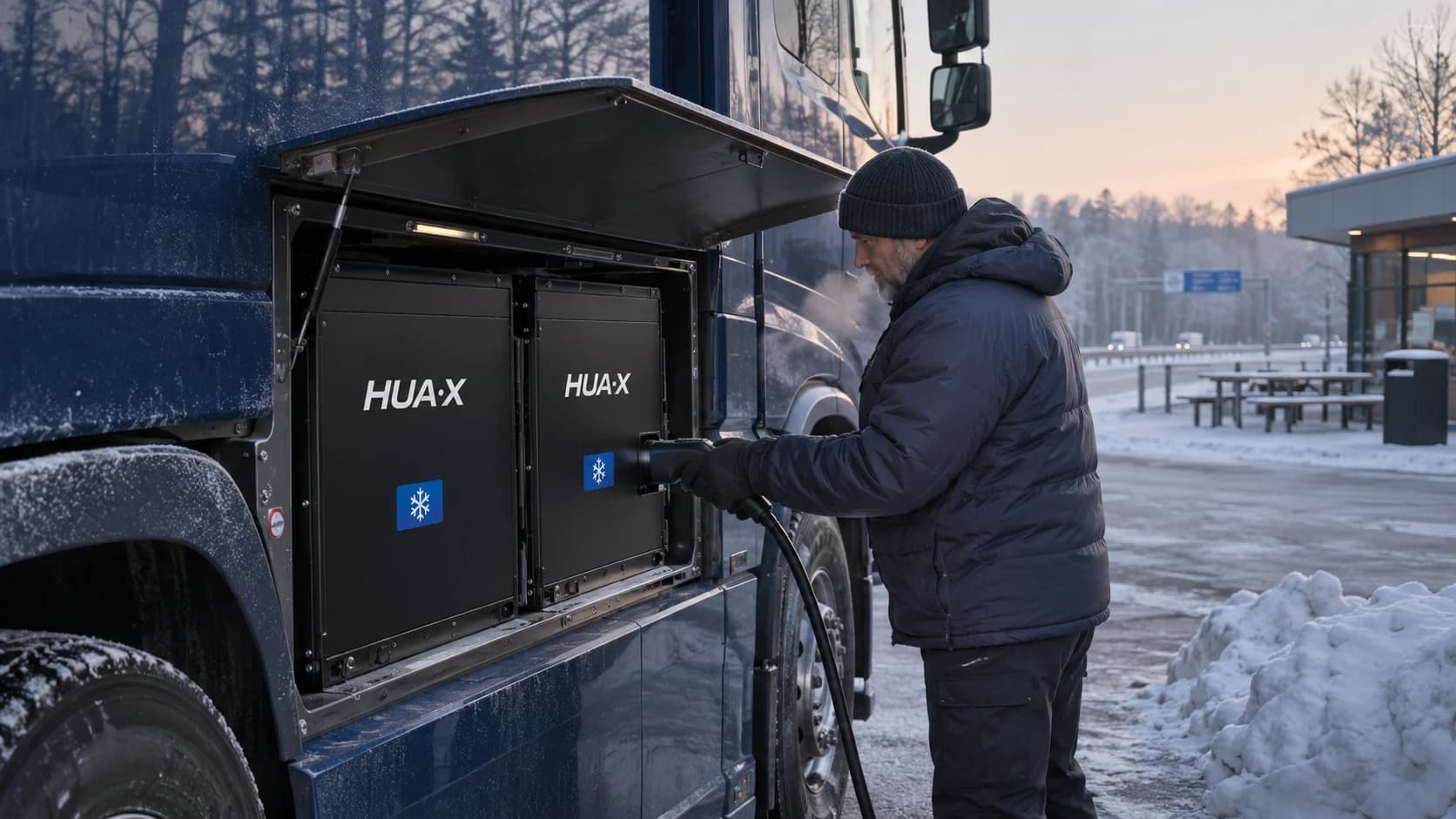
The rest-period load changed with the season
A driver on the Poland–Germany–Netherlands corridor spent around five nights a week in the truck. Winter operation required cab heating, while summer operation required air conditioning. The battery project had to serve both seasonal auxiliary loads and a cold-start requirement.
The vehicle was fitted with two 24 V-class, 200 Ah lithium groups, providing 10.24 kWh of specified combined energy.
Auxiliary duration and starting were assessed separately
The installation supported eight hours of cab heating in the winter operating case and ten hours of air conditioning in summer. A separate cold-start test at −28°C produced a first-attempt start with an 820 A pulse lasting three seconds.
These results described different duties: sustained energy for the driver's rest period and a short high-current event for starting the engine. Both were relevant to the customer's route.
Reduced overnight engine operation
Across approximately 200 parked nights a year, the project saved 1,600 litres of diesel. At the project's PLN 6.3-per-litre fuel price, this represented approximately PLN 10,000 annually.
The route’s seasons and rest schedule shaped both duties. The overnight energy requirement and the cold-start condition cannot be represented by capacity alone.
Project FAQ
Questions about this project reference
Configuration, application and operating conditions for this project.
Were the eight-hour heating and ten-hour cooling results simultaneous?
Does a successful start at −28°C establish charging capability at that temperature?
Plan a similar battery project
Discuss batteries for seasonal truck auxiliary and starting duties
Share the application, destination, operating requirements, quantity and schedule to discuss a configuration for your project.
Response target: within 12 hours. Supply scope, documents, lead time and warranty are confirmed with the quotation.