
HUA-X battery project reference / Noto Peninsula, Ishikawa, Japan
Portable Storage Supports Temporary Housing on the Noto Peninsula
A Noto Peninsula relief project supplied 120 portable power units with folding solar panels to households in temporary accommodation, prioritising older residents and families with infants.
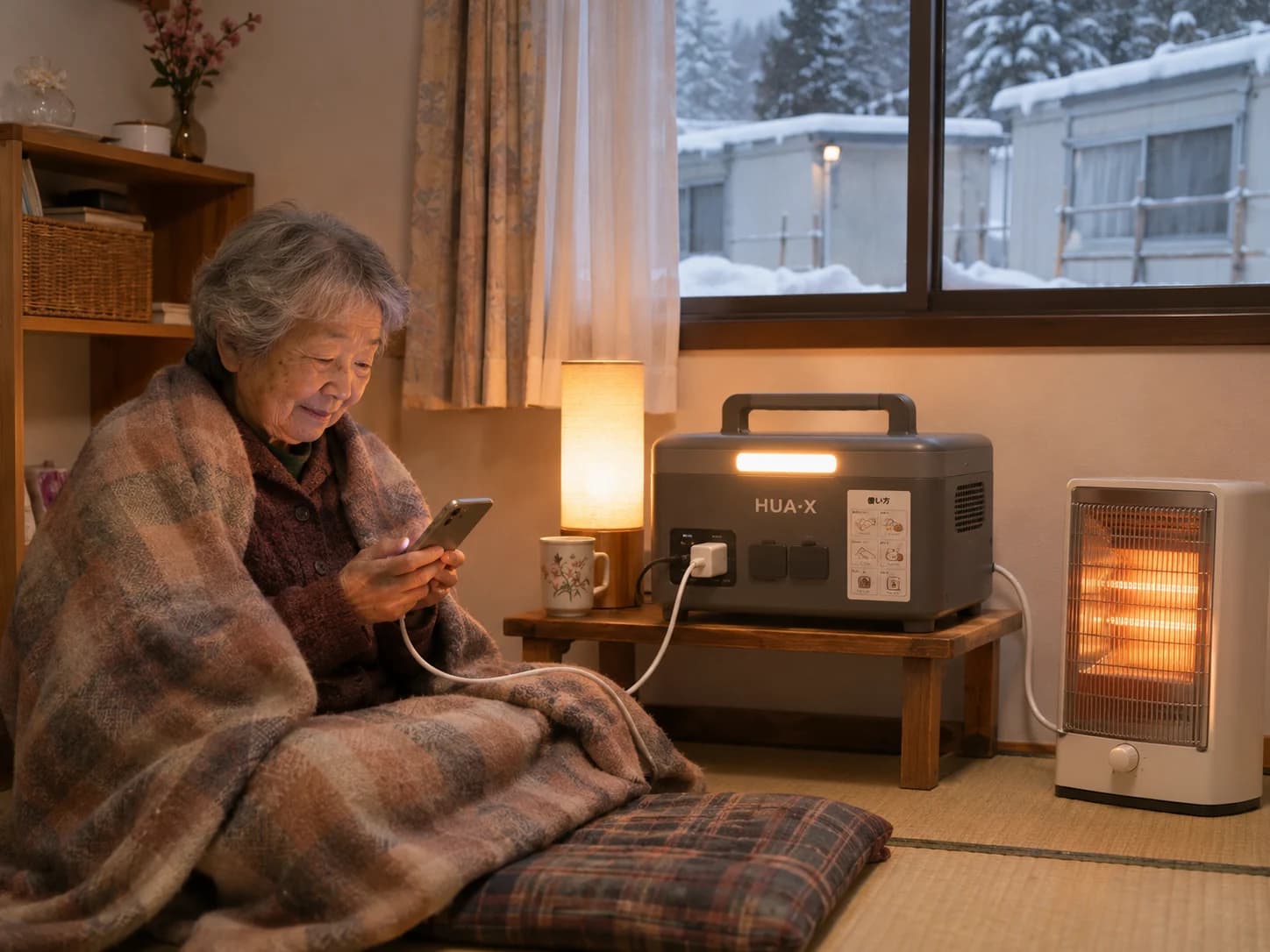
Additional power during recovery
Following the 2024 Noto Peninsula earthquake, a local social-welfare organisation procured portable storage for temporary housing where electricity supply was unreliable. The project prioritised households with older residents and infants.
The deployment supplied 120 units rated at 2 kWh and 2,000 W, paired with 400 W folding solar panels. The portable format allowed households to position the equipment near the loads they needed to support.
A defined set of household loads
The 18 kg unit could supply a 500 W electric heater for 3.5 hours in the project's operating example. Other uses included refrigeration, lighting and phone charging, with the duration depending on which appliances were operating.
At −2°C, the project's discharge assessment retained 89% of reference capacity. The battery-management arrangement limited charging below 0°C and resumed normal charging after the temperature rose.
Procurement and delivery model
The portable units were priced at US$620 each. The combined purchase of 120 units and solar panels totalled US$84,000, funded equally through corporate donations and local-government support.
The deployment used a distributed approach to emergency power. Each household received a manageable source for selected needs, while solar input provided another way to replenish the battery when suitable conditions were available.
Project FAQ
Questions about this project reference
Configuration, application and operating conditions for this project.
Could every household run a heater and other appliances for 3.5 hours?
Did the 400 W panel guarantee a full recharge each day?
How did the unit handle cold-weather use?
Plan a similar battery project
Discuss portable power for temporary accommodation
Share the application, destination, operating requirements, quantity and schedule to discuss a configuration for your project.
Response target: within 12 hours. Supply scope, documents, lead time and warranty are confirmed with the quotation.