
HUA-X battery project reference / Kibera area, Nairobi, Kenya
Solar Charging and Lithium Batteries Lower Tricycle Operating Costs in Nairobi
A Nairobi energy-service project combined lithium-powered passenger tricycles with three solar charging sites, reducing operating cost from KSh 9.2 to KSh 4.8 per kilometre.
Fuel costs and interruptions to charging
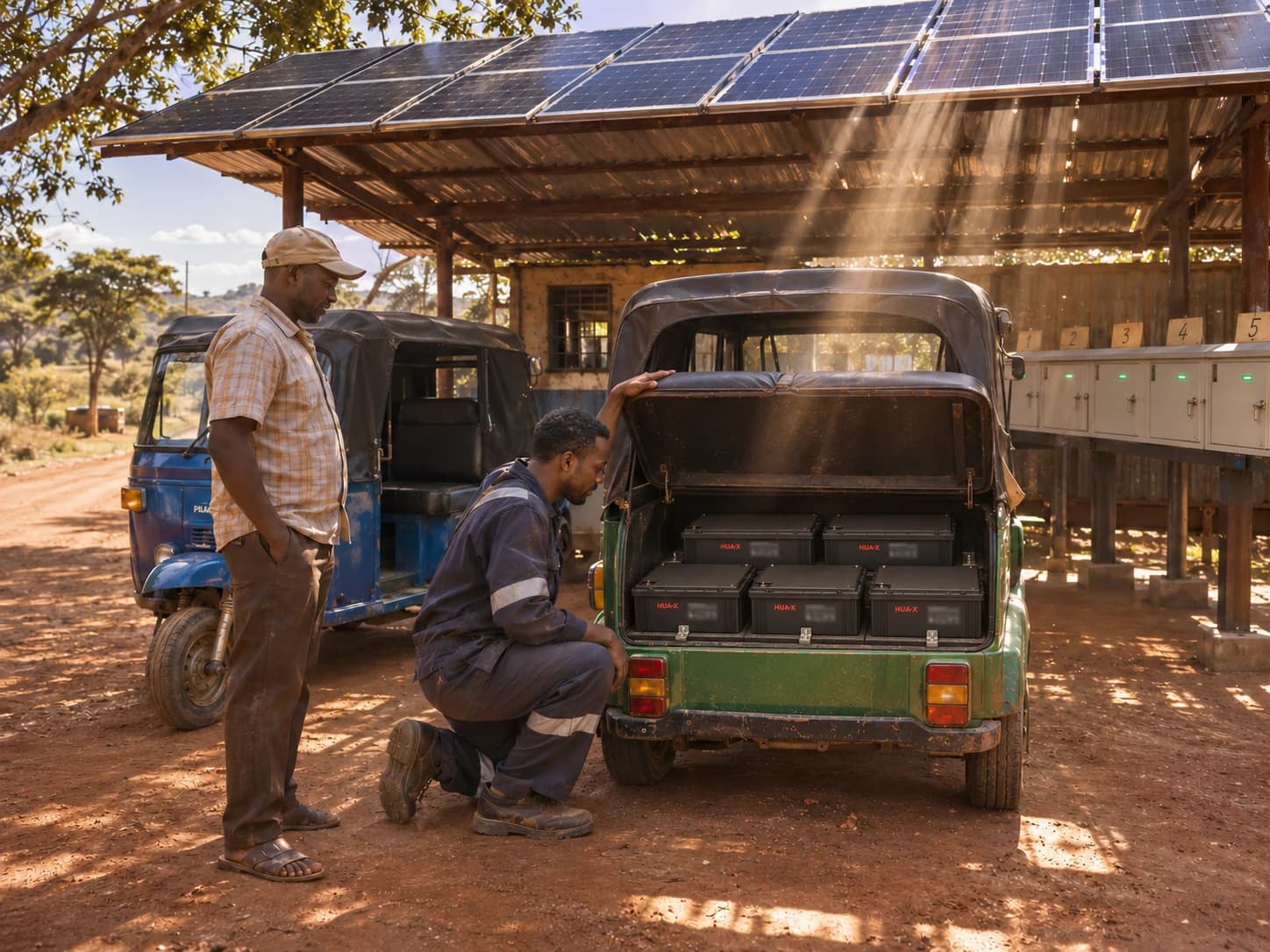
An energy-service provider working around Nairobi's Kibera area needed a more predictable energy supply for passenger tricycle operators. Drivers faced both fuel-price pressure and grid interruptions lasting four to six hours a day. The project combined vehicle electrification with local solar charging instead of relying on the vehicle battery alone to resolve the operating problem.
Vehicle storage paired with solar charging sites
Three charging sites were equipped with 6 kWp of solar generation and 10 kWh of buffer storage each. The tricycles used a 64 V, 12.8 kWh lithium battery system in each vehicle.
The lithium group weighed 112.5 kg, compared with 290 kg for the previous five-battery lead-acid arrangement. Vehicle range reached 140 km per charge, covering a full day's two operating rounds. The lower mass also reduced the load carried by the tyres and suspension.
An improvement visible in driver income
The project's operating cost fell from KSh 9.2 to KSh 4.8 per kilometre. Monthly net income increased by approximately KSh 11,000 per driver. These results reflect the combined vehicle and charging-site arrangement.
The first shipment comprised 90 sets, accompanied by UN38.3 documentation and an MSDS. Customs clearance through Mombasa took 21 days. For this operator, battery selection and local charging provision formed one service rather than two separate purchases.
Project FAQ
Questions about this project reference
Configuration, application and operating conditions for this project.
Was the operating-cost reduction due to the vehicle battery alone?
How are the vehicle battery and charging-site battery different?
Can one solar charging site replenish the entire fleet at once?
Plan a similar battery project
Discuss batteries for a solar-supported transport service
Share the application, destination, operating requirements, quantity and schedule to discuss a configuration for your project.
Response target: within 12 hours. Supply scope, documents, lead time and warranty are confirmed with the quotation.