
HUA-X battery project reference / Milan province, Italy
Two Wall-Mounted Batteries Raise Solar Self-Consumption at a Milan Villa
A four-person household near Milan paired 10.24 kWh of PowerHom storage with its existing solar array, increasing self-consumption from 32% to 78% and reducing the annual electricity bill to €740.
Solar production and household demand occurred at different times
A detached villa built in the 1970s already had 5.4 kWp of rooftop solar. Much of its generation arrived while the family was away: around 70% was exported at €0.09 per kWh, while electricity bought later cost €0.29 per kWh.
The household wanted to use more of its own daytime generation in the evening. Backup capability was an additional objective, but the regular mismatch between generation and demand drove the everyday operating strategy.
10.24 kWh installed in the garage
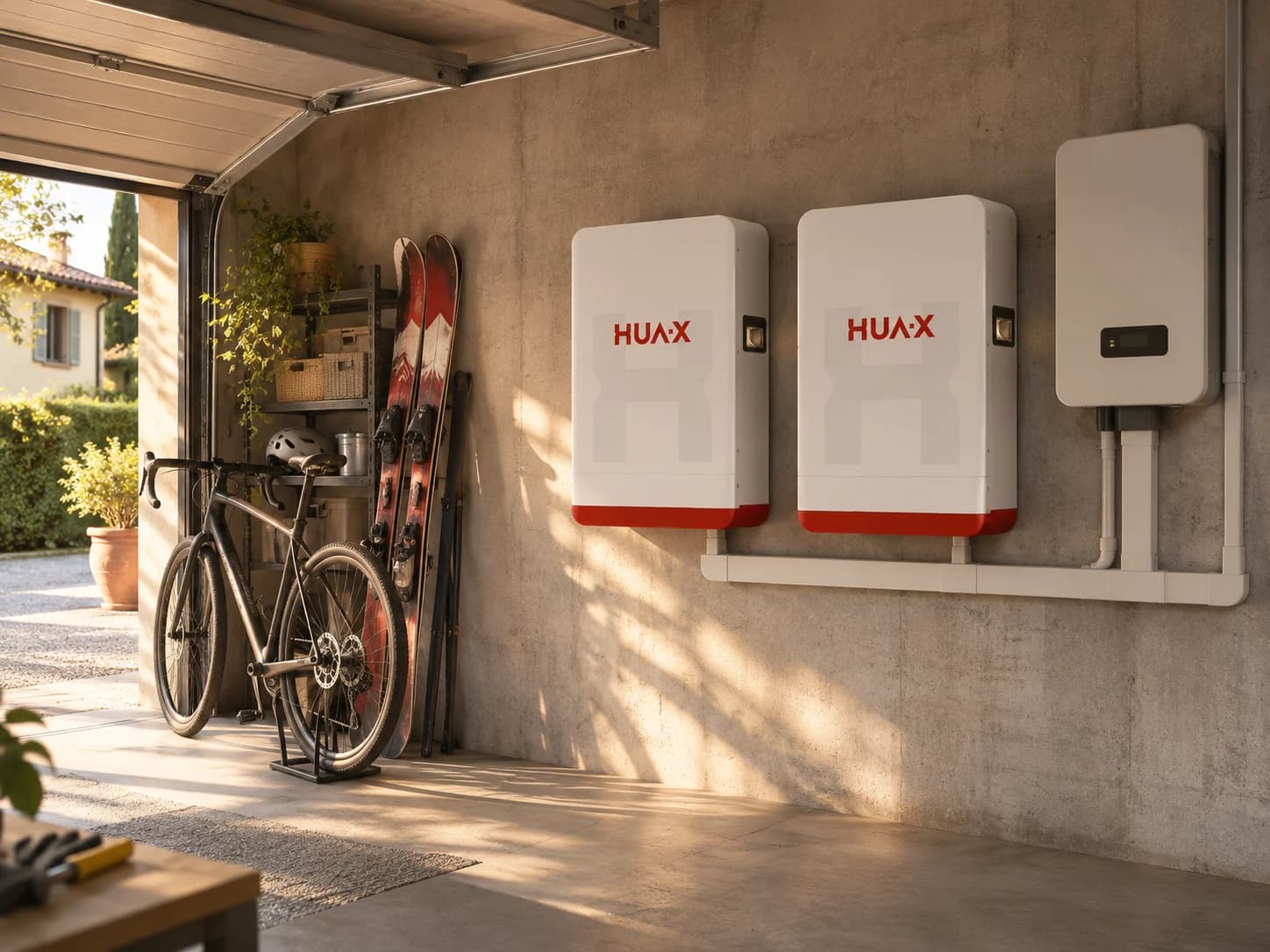
Two PowerHom-5W wall-mounted batteries were connected in parallel to provide 10.24 kWh at 51.2 V. They were installed in the garage, approximately 1.8 m from a 6.2 kW hybrid inverter, with CAN communication between the equipment.
The operating sequence prioritised direct solar use, charged the batteries with surplus generation and discharged them in the evening. Each battery weighed 53 kg and measured 640 × 420 × 156 mm; the installation was completed by two people in an afternoon.
More solar used at home
Solar self-consumption increased from 32% to 78%. The annual electricity bill fell from €2,180 to €740, and the household's net expenditure after the project subsidy was €1,690.
During winter conditions of approximately 3°C outdoors, the garage remained around 8°C. The garage provided a more sheltered operating environment than the outdoor air, while the battery's daily use followed the household's demand pattern.
Project FAQ
Questions about this project reference
Configuration, application and operating conditions for this project.
Why were two wall-mounted batteries useful for this household?
Does the battery determine the home's available AC output?
Would another home obtain the same bill reduction?
Plan a similar battery project
Discuss storage for evening household demand
Share the application, destination, operating requirements, quantity and schedule to discuss a configuration for your project.
Response target: within 12 hours. Supply scope, documents, lead time and warranty are confirmed with the quotation.