
HUA-X battery project reference / Johannesburg, Gauteng, South Africa
Battery Backup Supports Critical Loads at a Johannesburg Hospital
A 180-bed Johannesburg hospital installed a 125 kW / 261 kWh storage system with an STS, reducing diesel use by 62% while using the system for daily demand management.
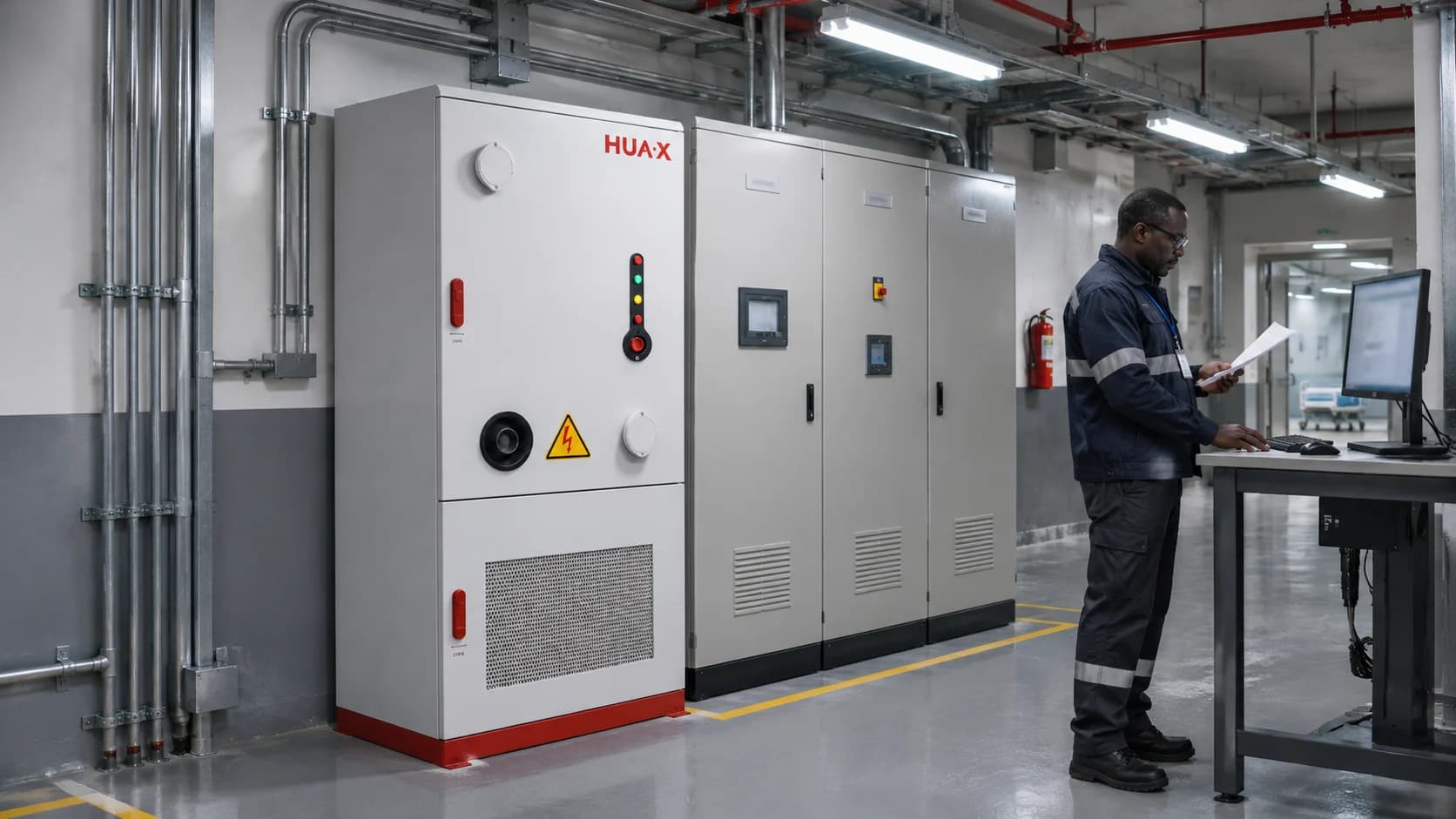
Bridging the interval before generator supply
A private hospital in Johannesburg relied on a 500 kVA diesel generator and UPS systems for critical departments. Generator transfer previously left a 12–15-second interval, while the operating-theatre and intensive-care UPS systems offered eight minutes of support.
The project addressed continuity for the hospital's protected loads and reduced reliance on the generator during interruptions. The battery system formed part of a layered electrical arrangement rather than replacing every existing backup device.
A dedicated battery and switching arrangement
The hospital added a PowerFac 125 kW / 261 kWh system with an STS. The project achieved transfer below 20 ms and connected the intensive-care, operating-theatre and laboratory load groups to the storage-backed arrangement. The generator remained available as a further backup source.
During normal grid operation, storage was dispatched around the hospital's morning and evening peaks. The facility's maximum demand was approximately 420 kW, making the power contribution of the battery useful beyond outage periods.
Lower generator dependence
Annual diesel consumption fell by 62%. The project also recorded maintenance-cost and monthly demand-charge savings, with a combined simple-payback estimate of 4.1 years.
For this customer, the operational priority was the continuity of the protected circuits. Daily electricity-cost management provided an additional use for equipment installed to support that requirement.
Project FAQ
Questions about this project reference
Configuration, application and operating conditions for this project.
Did the battery replace the hospital's generator and UPS systems?
Is the below-20 ms transfer time a battery-cabinet-only specification?
How can peak management and emergency reserve work together?
Plan a similar battery project
Discuss storage within a critical-load backup architecture
Share the application, destination, operating requirements, quantity and schedule to discuss a configuration for your project.
Response target: within 12 hours. Supply scope, documents, lead time and warranty are confirmed with the quotation.