
HUA-X battery project reference / South Jakarta, Indonesia
LFP Batteries Support a 1,200-Rider Swapping Network in Jakarta
A South Jakarta operator adopted 64 V / 50 Ah PowerCycle-X batteries across a 38-station swapping network, aligning daily rider range with a battery-rental service.
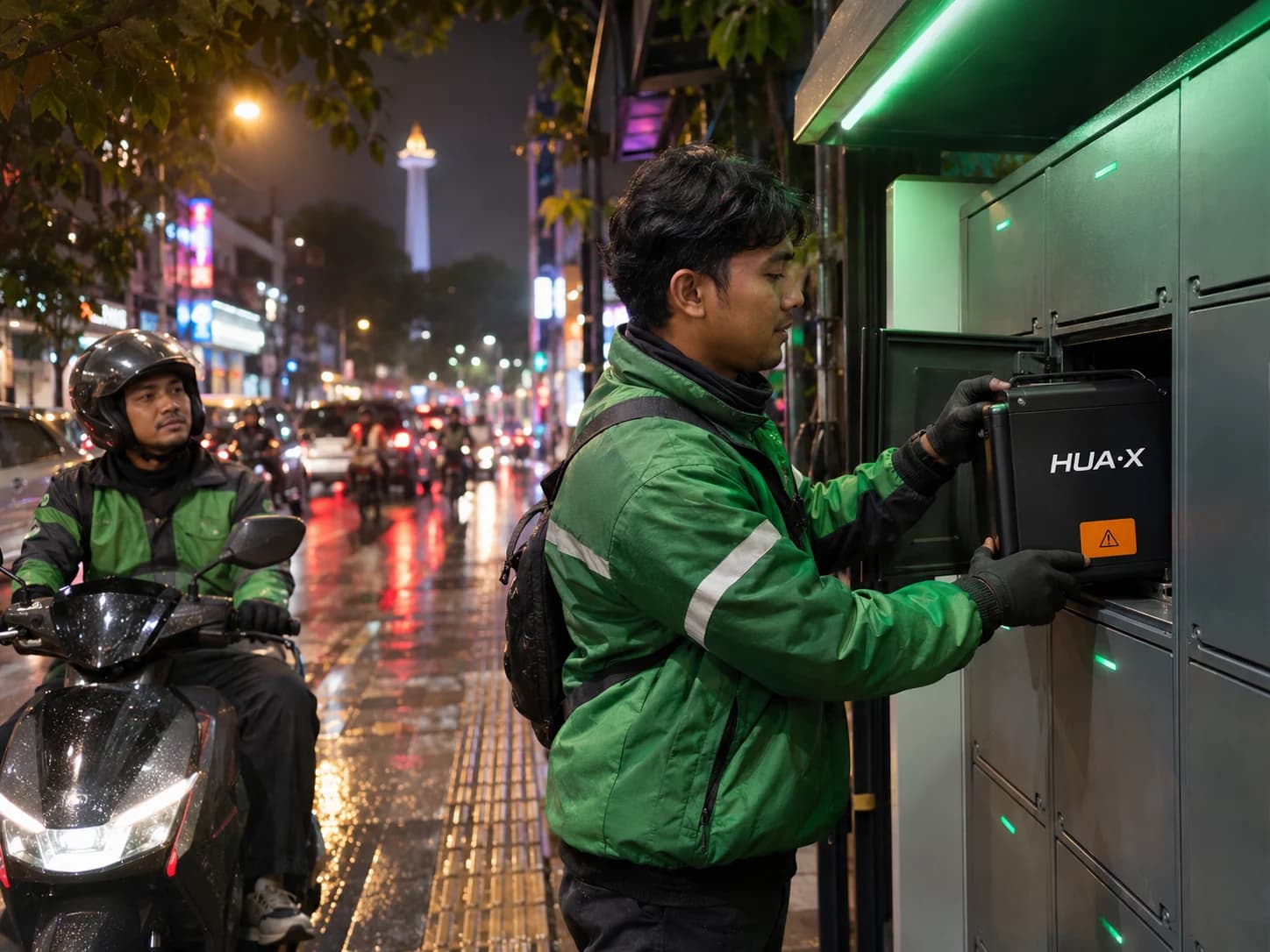
Battery life within a high-use transport service
A South Jakarta battery-swapping operator served 1,200 motorcycle riders through 38 stations. The service exposed batteries to high temperatures and frequent charging. Its former packs had declined to 71% capacity after 18 months under conditions that included temperatures of 45°C and two fast charges a day.
The operator changed to 64 V, 50 Ah PowerCycle-X lithium iron phosphate batteries in 2024. Battery durability mattered to the rental business as well as to the rider using each pack.
A 3.2 kWh pack within the station network
The selected battery used a 20S1P configuration, an SPCC steel enclosure and an Anderson connector. The station charging cycle took four hours. Nominal driving range was 85 km; rider testing with a passenger and congested traffic produced approximately 62 km.
The swapping network let riders exchange batteries within their working day instead of waiting for an onboard pack to charge. The service supported riders travelling approximately 140 km daily.
Operating cost and cycle performance
Monthly battery rental was IDR 650,000, about US$40, and the rider's energy cost was 42% below the previous petrol expense. The battery performance figure supplied for the project was 80% remaining capacity after 3,500 cycles.
The commercial value depended on the full service: compatible packs, station availability, charging turnaround and battery durability. The pack alone was one component of the operator's daily transport offering.
Project FAQ
Questions about this project reference
Configuration, application and operating conditions for this project.
How could riders cover 140 km a day with a tested range of about 62 km per battery?
Can an Anderson connector make this battery compatible with any swapping station?
Plan a similar battery project
Discuss batteries for a rider-swapping network
Share the application, destination, operating requirements, quantity and schedule to discuss a configuration for your project.
Response target: within 12 hours. Supply scope, documents, lead time and warranty are confirmed with the quotation.