
HUA-X battery project reference / I-80 corridor, Nebraska, United States
Lithium Batteries Extend Overnight Truck Air Conditioning on the I-80 Corridor
A long-haul truck owner on the I-80 corridor installed two lithium battery groups, running the parked cab's air conditioner for 11 hours 20 minutes with 18% charge remaining.
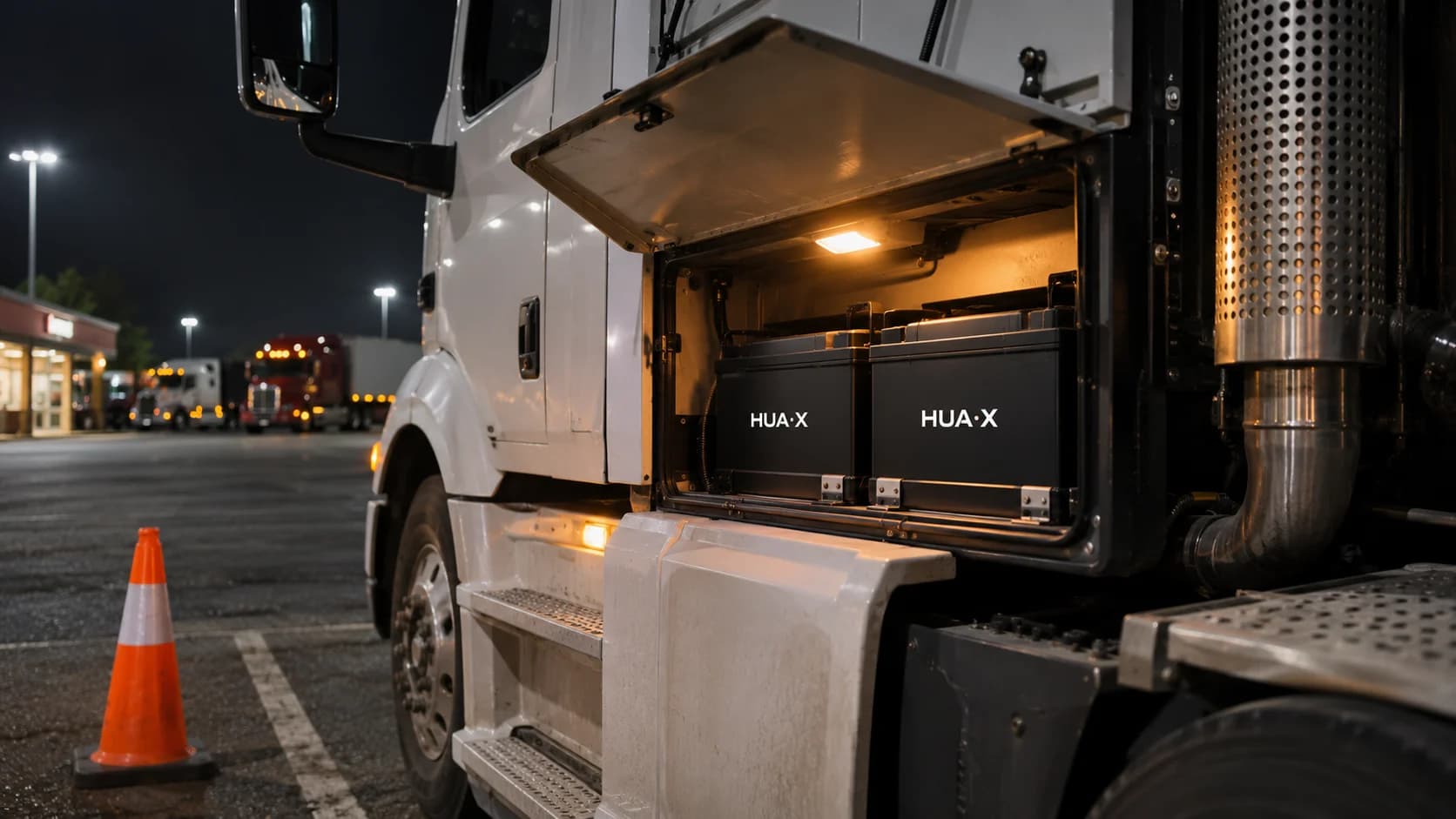
The parked cab needed power through the night
A long-haul truck owner travelling the I-80 corridor needed to run cab air conditioning without repeatedly restarting the engine overnight. The former AGM arrangement provided approximately 4.8 kWh of usable energy and supported air conditioning for only four hours.
The project addressed both overnight auxiliary demand and engine starting. These were separate duties for the battery installation, each with a different operating requirement.
Two lithium groups within the existing battery space
The vehicle received two 24 V-class, 200 Ah lithium battery groups, specified at 5.12 kWh each and 10.24 kWh combined. Each group weighed 52 kg and was installed in the existing battery-box area behind the cab.
In the project's test, the 12,000 BTU parked-cab air conditioner ran for 11 hours 20 minutes, with 18% charge remaining. The installation also delivered an 860 A, three-second starting pulse and achieved a first-attempt start at −18°C.
Overnight fuel savings
The two batteries cost US$2,360 in total, at US$1,180 each. Using the project's eight-US-gallon nightly fuel saving, US$4.10-per-gallon price and 220 parked nights, the annual fuel saving was approximately US$7,200.
The overnight load and rest period shaped the auxiliary-storage requirement. Maintaining cab comfort through that period was a separate duty from providing the short starting pulse.
Project FAQ
Questions about this project reference
Configuration, application and operating conditions for this project.
Does a 12,000 BTU rating tell how long the battery can run the air conditioner?
Can a battery suitable for overnight loads also start the engine?
Plan a similar battery project
Discuss battery power for overnight truck loads
Share the application, destination, operating requirements, quantity and schedule to discuss a configuration for your project.
Response target: within 12 hours. Supply scope, documents, lead time and warranty are confirmed with the quotation.