
HUA-X battery project reference / District 7, Ho Chi Minh City, Vietnam
A Shared Battery Pool Keeps 260 Delivery Motorcycles Moving in Ho Chi Minh City
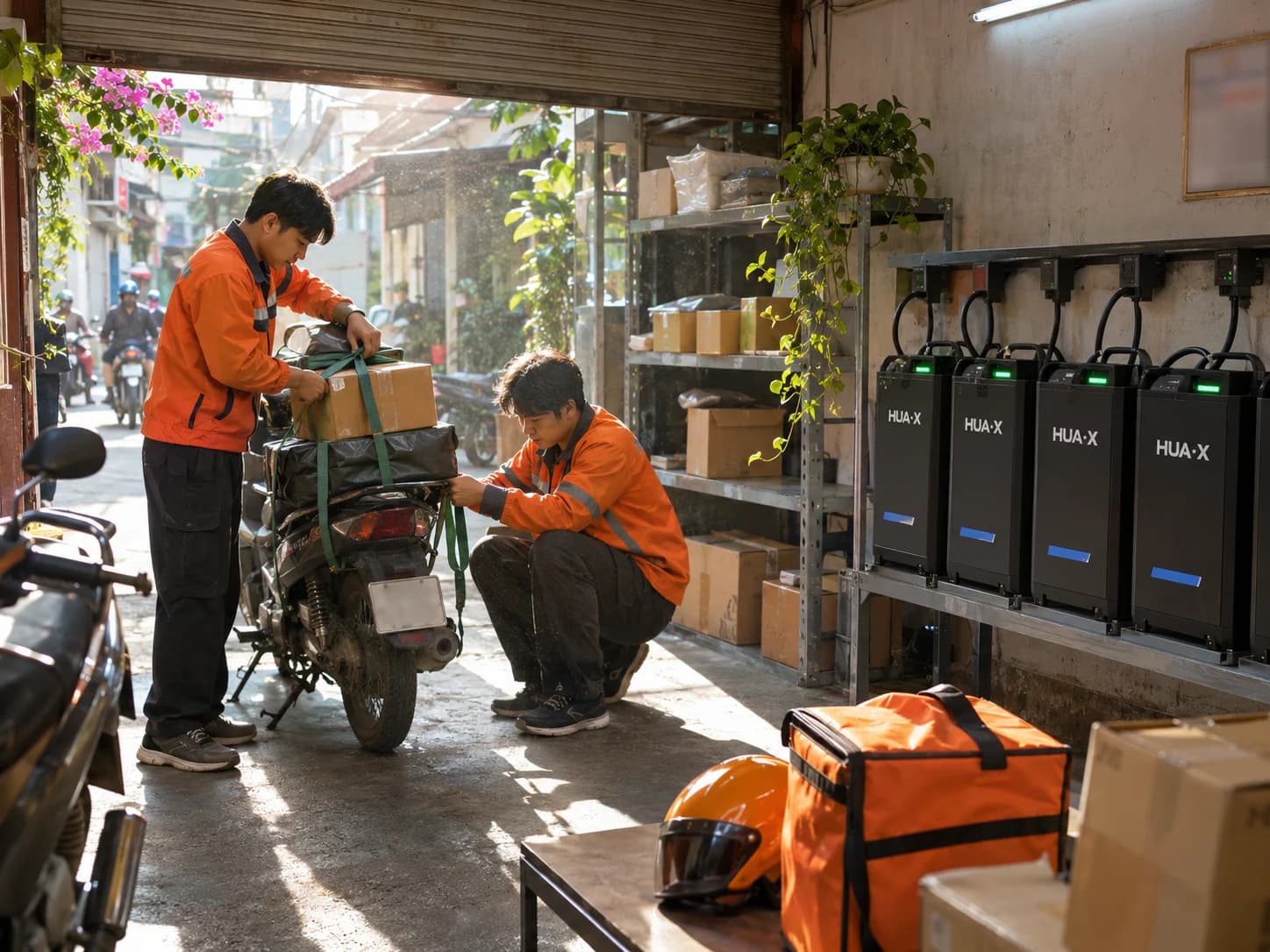
A delivery operator paired 260 electric motorcycles with 400 batteries, using 76.8 V / 50 Ah packs to support longer delivery routes and reduce waiting for a charged replacement.
Longer routes needed more energy per pack
A courier company in Ho Chi Minh City electrified 260 delivery motorcycles in 2025. Individual delivery rounds frequently exceeded 70 km, so the operator selected a 76.8 V platform with 50 Ah capacity. Its 3.84 kWh energy rating provided more energy per pack than a 64 V, 50 Ah arrangement.
Vehicle range had to be considered together with the availability of replacement batteries at the delivery depots.
Charging capacity distributed across twelve depots
The project supplied 400 batteries for 260 motorcycles, approximately 1.54 batteries per vehicle. Twelve depots each provided six charging positions, and riders used a 2.5-hour midday top-up window.
The packs used Anderson connectors and weighed 19 kg. A handle allowed riders to remove a battery for charging or replacement, which was useful where access involved older apartment buildings without lifts.
Range and fleet condition
Testing with a 35 kg load produced 96 km of range. Vehicles averaged 118 km of daily travel through the combination of pack capacity and the depot charging arrangement. After 11 months, average battery state of health was 96.4%.
The project battery price was US$358 per unit. The additional batteries in the shared pool supported vehicle availability: the operator did not need every pack to finish charging before the next vehicle could leave.
Project FAQ
Questions about this project reference
Configuration, application and operating conditions for this project.
Why were 400 batteries supplied for 260 motorcycles?
Does the 118 km daily distance represent one charge?
What does the 96.4% state-of-health result cover?
Plan a similar battery project
Discuss battery capacity and pool size for a delivery fleet
Share the application, destination, operating requirements, quantity and schedule to discuss a configuration for your project.
Response target: within 12 hours. Supply scope, documents, lead time and warranty are confirmed with the quotation.