
HUA-X battery project reference / Hanoi, Vietnam
A 76.8 V Battery Upgrade Covers a Fixed Hanoi Delivery Route
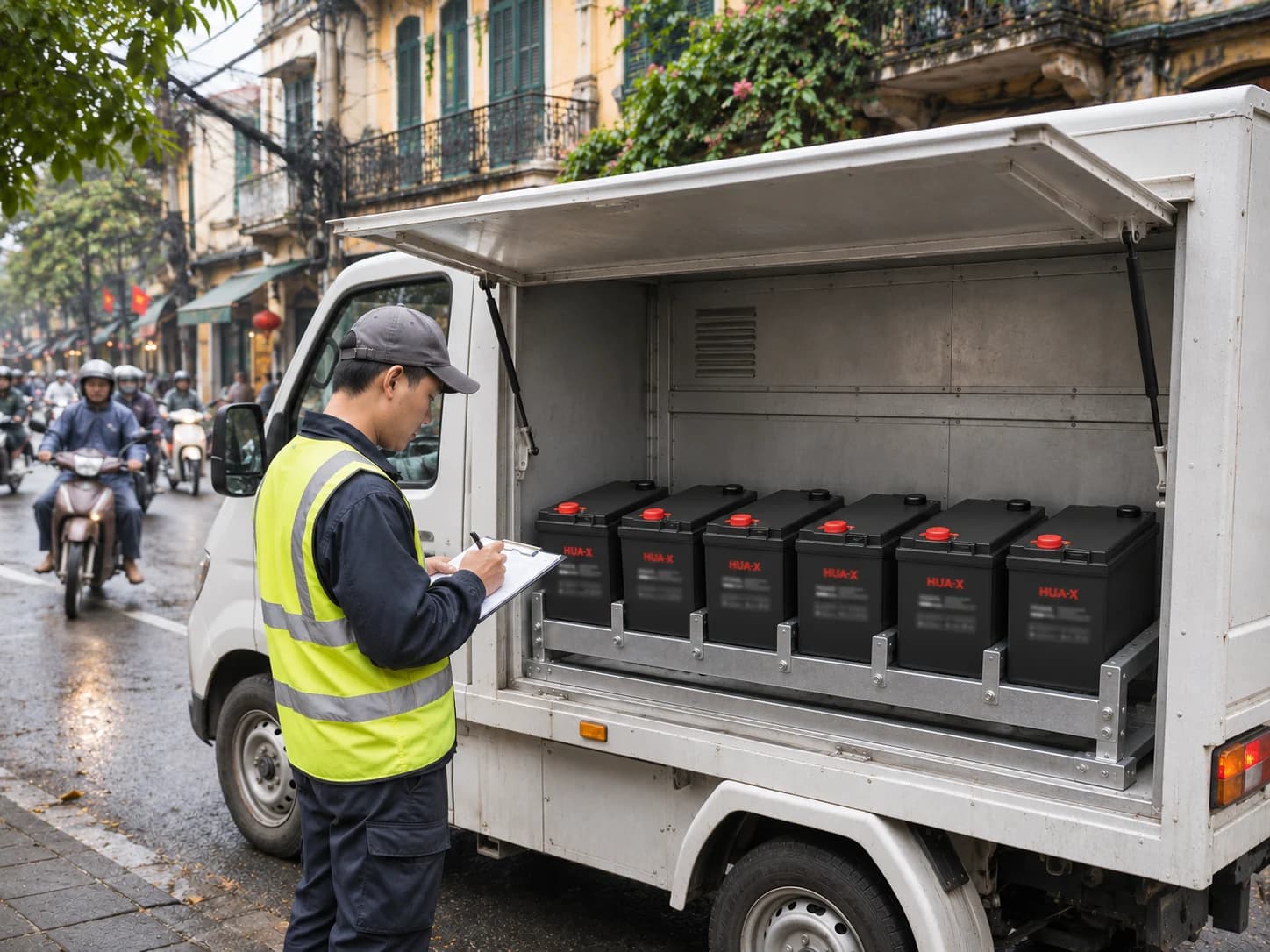
A Hanoi building-materials fleet adopted 7.68 kWh lithium groups for its electric delivery trucks, achieving 68 km of tested range with an 800 kg load on a 62 km route.
Matching range to a fixed working route
A building-materials delivery fleet in Hanoi operated 52 one-tonne-class electric vehicles on a 72 V lead-acid platform. The original six-battery groups carried a nominal 7.2 kWh, but the fleet's usable energy was below 3.6 kWh under its operating discharge limit. Vehicles returned for charging after roughly 40 km.
The customer's regular warehouse–Hoan Kiem–warehouse route covered 62 km. The conversion therefore needed to close a defined route gap while carrying a substantial delivery load.
More usable energy within the vehicle platform
The project installed a 76.8 V, 7.68 kWh lithium battery system in each vehicle. The fleet obtained close to 7 kWh of usable energy in its operating arrangement. This gave the vehicles more energy between charging stops without changing the route itself.
Summer conditions reached 38°C. A small 12 V fan was added to the battery compartment for forced ventilation at a cost below US$6 per vehicle; the recorded compartment-temperature reduction was 7°C.
Completing the route under load
With an 800 kg load, the vehicles achieved a tested range of 68 km. That result covered the customer's 62 km fixed route, addressing the specific range shortfall that had interrupted daily deliveries.
The useful comparison in this project is the distance achieved under the working load and route conditions. Nominal battery energy alone did not describe how much of the delivery run the former system could complete.
Project FAQ
Questions about this project reference
Configuration, application and operating conditions for this project.
Why was usable energy more relevant than nominal capacity on this route?
Would 68 km be a suitable range target for a different delivery route?
Plan a similar battery project
Discuss battery capacity for a loaded delivery route
Share the application, destination, operating requirements, quantity and schedule to discuss a configuration for your project.
Response target: within 12 hours. Supply scope, documents, lead time and warranty are confirmed with the quotation.