
HUA-X battery project reference / Hai Phong port, Vietnam
Opportunity Charging Replaces Battery Lifting at Hai Phong Port
A Hai Phong container-yard operator adopted 80 V / 560 Ah lithium packs for heavy forklifts, replacing crane-assisted battery changes with scheduled charging during shift handovers.
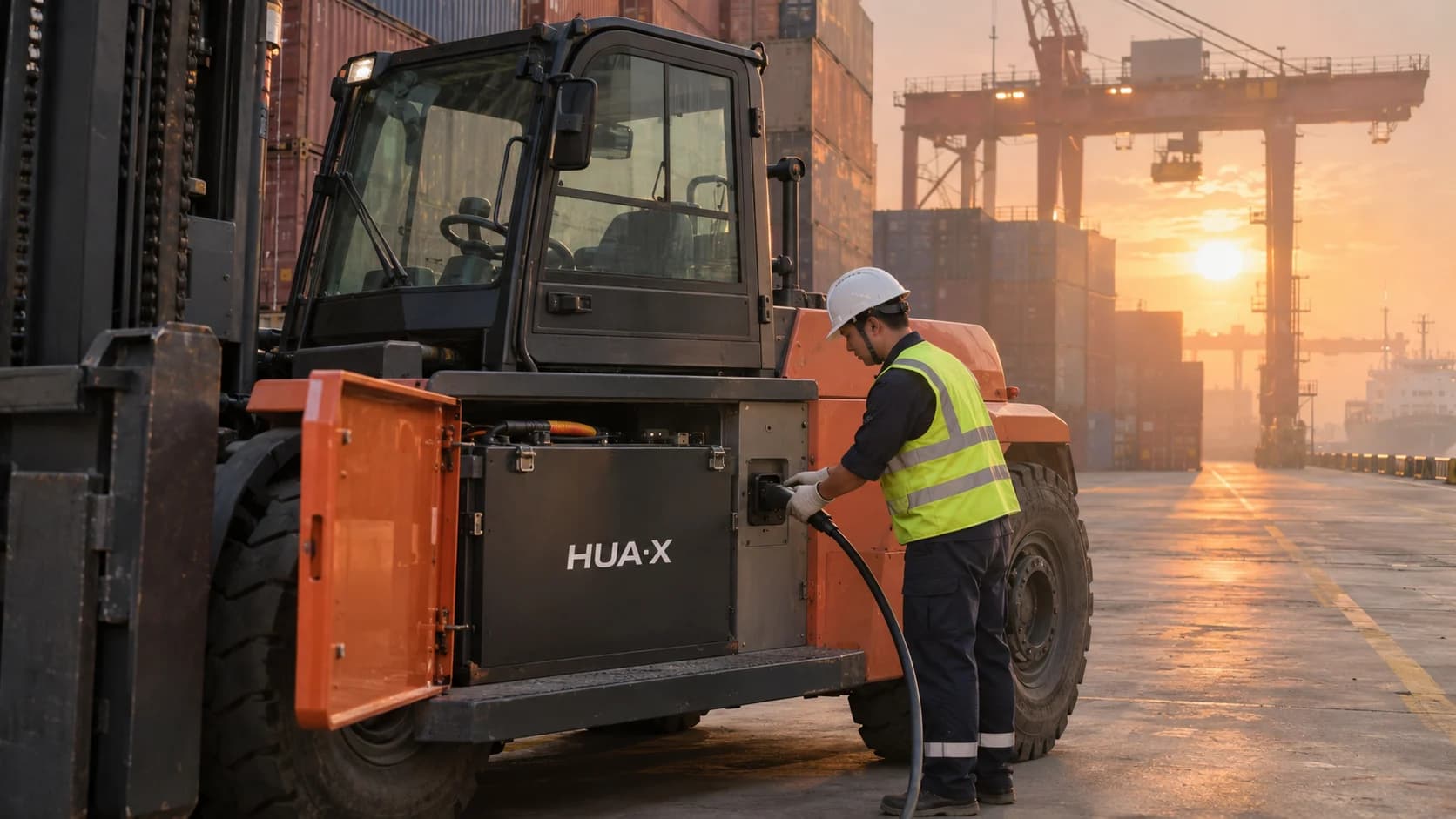
A heavy battery change consumed working time
A container-yard operation at Hai Phong port used heavy forklifts for approximately twenty hours a day across two shifts. Its previous 80 V, 700 Ah lead-acid battery groups weighed 2.1 tonnes and required crane handling for replacement. Each exchange took around 25 minutes.
High humidity and salt exposure created a second maintenance burden, with terminals requiring cleaning every quarter.
Charging fitted around shift handovers
The project adopted 80 V, 560 Ah lithium packs rated at 44.8 kWh, paired with 30 kW charging equipment. Drivers connected the trucks during forty-minute shift-change windows; the recorded replenishment was 30% of capacity per stop.
The operating schedule used two such top-up periods a day and removed the routine crane-assisted battery-exchange process. The pack installation included protective coating and sealed terminal treatment for the port environment.
Less battery handling and terminal maintenance
After two years, the terminal inspection found no green corrosion. The project also recorded annual maintenance savings of US$4,200. The initial order supplied twelve packs at US$9,800 per pack.
Charging access and environmental protection supported the port duty while removing a recurring battery-lifting process from the daily work schedule.
Project FAQ
Questions about this project reference
Configuration, application and operating conditions for this project.
How did opportunity charging remove crane-assisted battery changes?
Why did the port specify coating and sealed terminals?
Plan a similar battery project
Discuss lithium batteries for a port forklift operation
Share the application, destination, operating requirements, quantity and schedule to discuss a configuration for your project.
Response target: within 12 hours. Supply scope, documents, lead time and warranty are confirmed with the quotation.