HUA-X battery project reference / Fresno, California, United States
A 261 kWh Storage System Reduces Cold-Store Electricity Costs in Fresno
A Fresno produce cold store installed a PowerFac 125 kW / 261 kWh system for peak-demand management and time-of-use operation, recording approximately US$53,000 in annual electricity-cost savings.
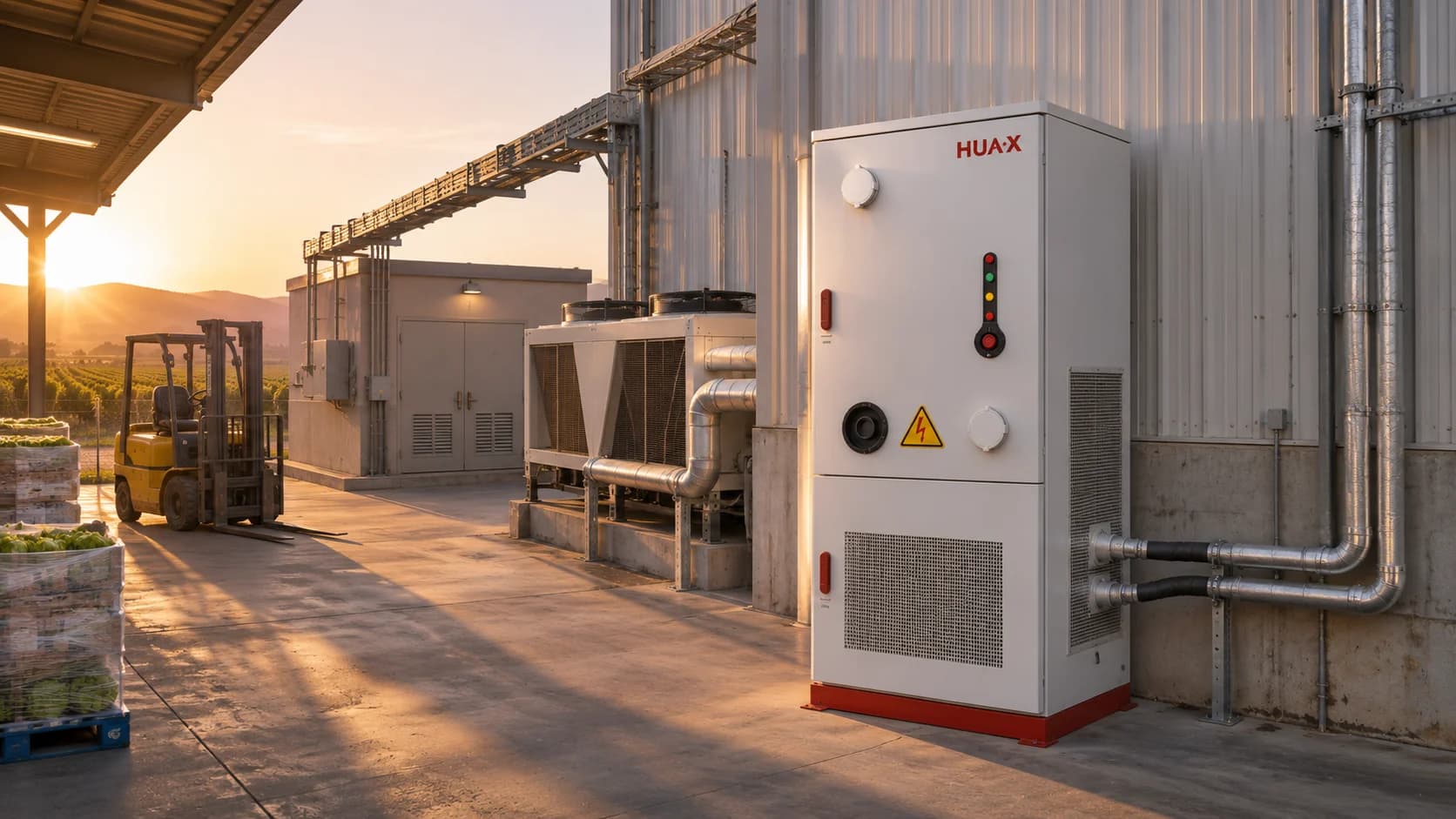
Refrigeration demand drove the electricity bill
A produce pre-cooling facility in Fresno operated four 120 RT ammonia refrigeration units. Summer peak demand reached 780 kW, and the facility's demand-charge rate was US$18.6 per kW. Annual demand charges alone were approximately US$174,000.
The site's summer time-of-use rates were US$0.46 per kWh at peak and US$0.19 off-peak. The storage project therefore targeted both the maximum grid demand and the timing of purchased electricity.
Storage dispatched around the facility load
The facility installed one liquid-cooled PowerFac 125 kW / 261 kWh system in a grid-connected configuration. Dispatch focused on the afternoon peak-price window, with charging scheduled in the lower-price period. The operating peak fell from 780 kW to 660 kW.
Peak-demand reduction depended on when refrigeration demand occurred. The 261 kWh energy rating determined how much discharge could be allocated within the peak window, while the 125 kW power rating limited the instantaneous contribution.
Two sources of savings
The project recorded US$22,300 a year in demand-charge savings and US$31,000 from time-of-use operation, approximately US$53,000 combined. Against the US$128,000 installed investment, the project economics indicated a 2.4-year simple payback.
Coordinating storage with the refrigeration load and tariff structure created two distinct savings streams: lower demand charges and lower energy costs.
Project FAQ
Questions about this project reference
Configuration, application and operating conditions for this project.
What do 125 kW and 261 kWh mean for a cold-store load?
How did the project produce two types of electricity-cost savings?
Does this grid-connected installation also provide outage backup?
Plan a similar battery project
Discuss peak-demand storage for a cold-storage facility
Share the application, destination, operating requirements, quantity and schedule to discuss a configuration for your project.
Response target: within 12 hours. Supply scope, documents, lead time and warranty are confirmed with the quotation.