
HUA-X battery project reference / Naples, Florida, United States
A Florida Golf Course Replaces Battery Watering with Lithium Packs
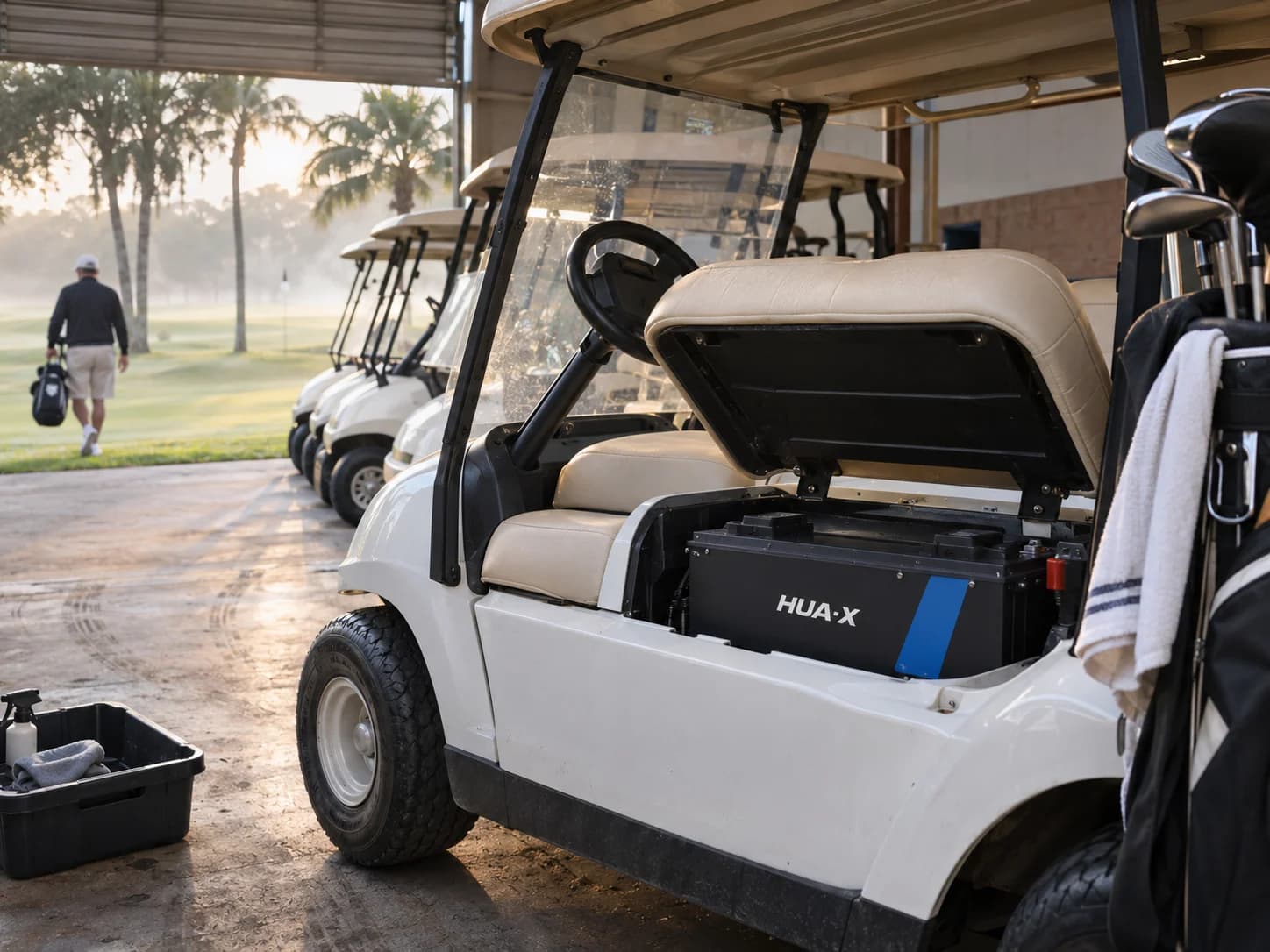
A 60-cart Florida golf course replaced heavy lead-acid groups with 51.2 V / 105 Ah lithium packs, reducing battery mass from 262 kg to 42 kg and eliminating routine battery watering.
Declining range and recurring maintenance
An 18-hole golf course in Naples operated 60 carts purchased in 2019. After four years, the lead-acid groups had declined from a 36-hole range to approximately 22 holes, creating mid-day charging interruptions.
Maintenance was also a recurring fleet task. Each cart carried eight lead-acid batteries, giving the maintenance team 480 watering points across the fleet. The course spent approximately US$9,600 a year on the associated labour.
A much lighter battery installation
Each cart received one 51.2 V, 105 Ah lithium pack with an energy rating of approximately 5.4 kWh. Battery mass fell from 262 kg to 42 kg, a reduction of 220 kg per cart. The project included adaptation of the charging equipment.
In Florida's hot, humid summer, the battery compartment received two 12 V ventilation fans. The observed compartment-temperature reduction was 8°C.
Changes visible to the course operator
The measured battery-use figure for an 18-hole round fell from 62% with the previous installation to 41% with the lithium pack. Routine battery watering was removed from the maintenance schedule.
The packs were priced at US$1,480 each, giving US$88,800 for 60 units. Charger conversion was listed at US$6,200. Daily availability and maintenance workload were therefore part of the fleet’s purchase decision alongside the battery price.
Project FAQ
Questions about this project reference
Configuration, application and operating conditions for this project.
Why was replacing eight batteries with one pack useful to the golf course?
Was the existing lead-acid charger retained unchanged?
Plan a similar battery project
Discuss a lithium conversion for a golf-cart fleet
Share the application, destination, operating requirements, quantity and schedule to discuss a configuration for your project.
Response target: within 12 hours. Supply scope, documents, lead time and warranty are confirmed with the quotation.