
HUA-X battery project reference / Rocky Mountains, Colorado, United States
Solar-Charged Portable Storage Supports an Off-Grid Colorado RV
A Colorado RV owner used a 2 kWh portable power unit with 400 W rooftop solar to supply evening essentials, recording 0.9 kWh of overnight consumption without running a petrol generator.
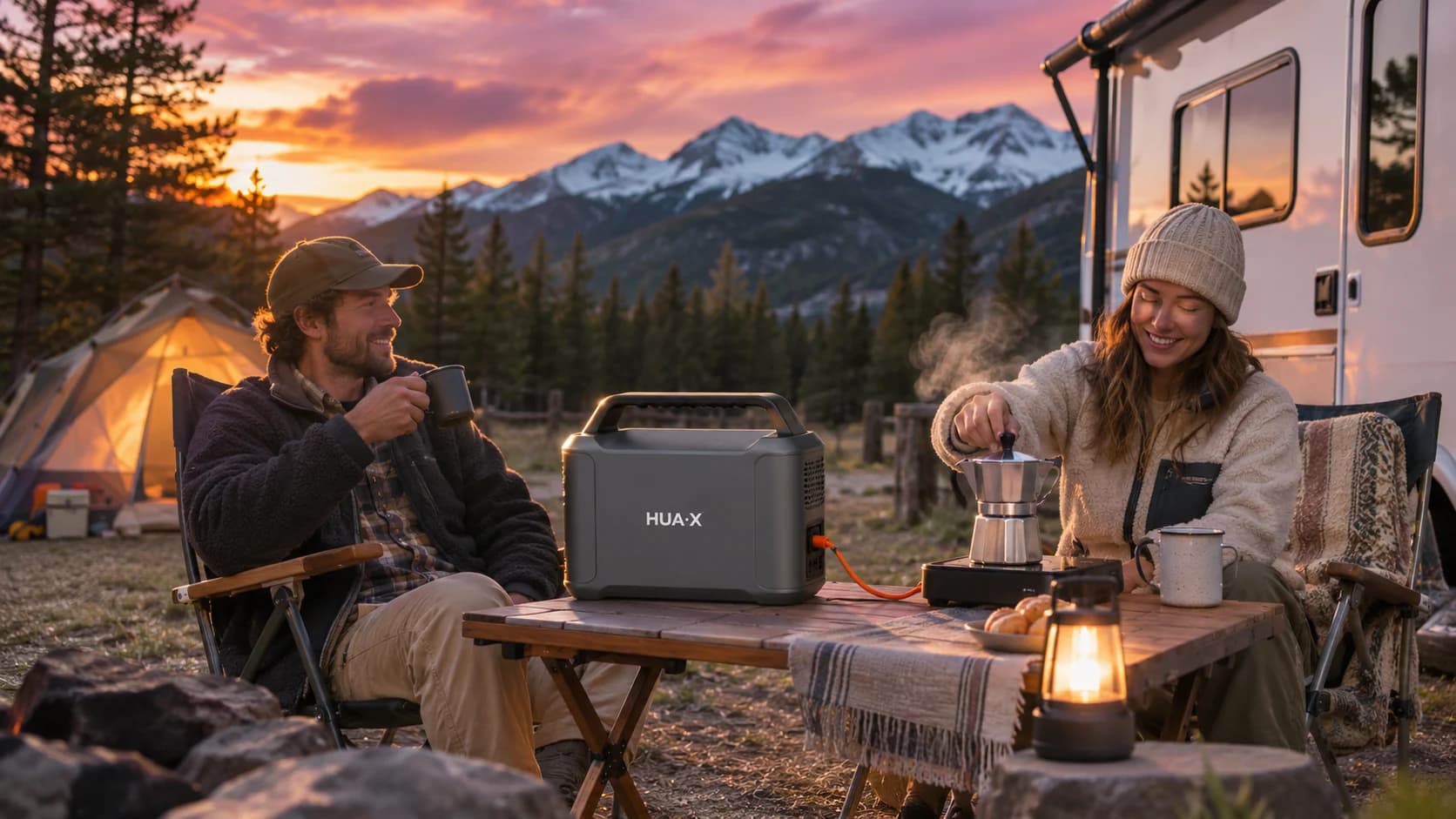
Power at campsites without an electrical hookup
An RV owner visiting mountain campsites around 3,000 m elevation previously relied on petrol generators. Fuel carriage, noise and the need to operate a generator around overnight stays made a battery-based arrangement attractive.
The project combined one 2 kWh portable unit with 400 W of rooftop solar. The unit accepted both vehicle charging and solar input, giving the owner more than one replenishment option.
Daytime charging and a selected overnight load
Daytime solar supported refrigeration and laptop use. At night, the battery supplied a CPAP device, lighting and phone charging. Measured overnight energy use was 0.9 kWh. Daytime solar charging replenished the battery for subsequent use.
The portable unit was rated for 2,000 W continuous output with a 4,000 W peak rating. It weighed 18 kg and operated inside the vehicle during nights when outdoor temperature fell to −5°C.
A quieter overnight routine
The unit cost US$680. The arrangement allowed the selected overnight loads to run without a generator, while daytime solar contributed to the following night's energy supply.
The RV’s daily energy balance combined a defined set of essential loads, measured overnight consumption and enough charging opportunity to replace that use. The peak output rating serves a different purpose from the energy available through the night.
Project FAQ
Questions about this project reference
Configuration, application and operating conditions for this project.
Can the 4,000 W peak rating support a 2,400 W continuous appliance load?
How did the RV balance daytime charging with overnight demand?
Does this case establish medical backup suitability for any CPAP device?
Plan a similar battery project
Discuss portable storage around your RV's overnight loads
Share the application, destination, operating requirements, quantity and schedule to discuss a configuration for your project.
Response target: within 12 hours. Supply scope, documents, lead time and warranty are confirmed with the quotation.