
HUA-X battery project reference / Cebu province, Philippines
Portable Batteries Support Temporary Medical Points after a Cebu Typhoon
A Cebu relief deployment supplied sixty 1 kWh portable units for temporary medical points, supporting selected refrigeration, lighting and communication loads during extended outages.
Power needed close to the point of care
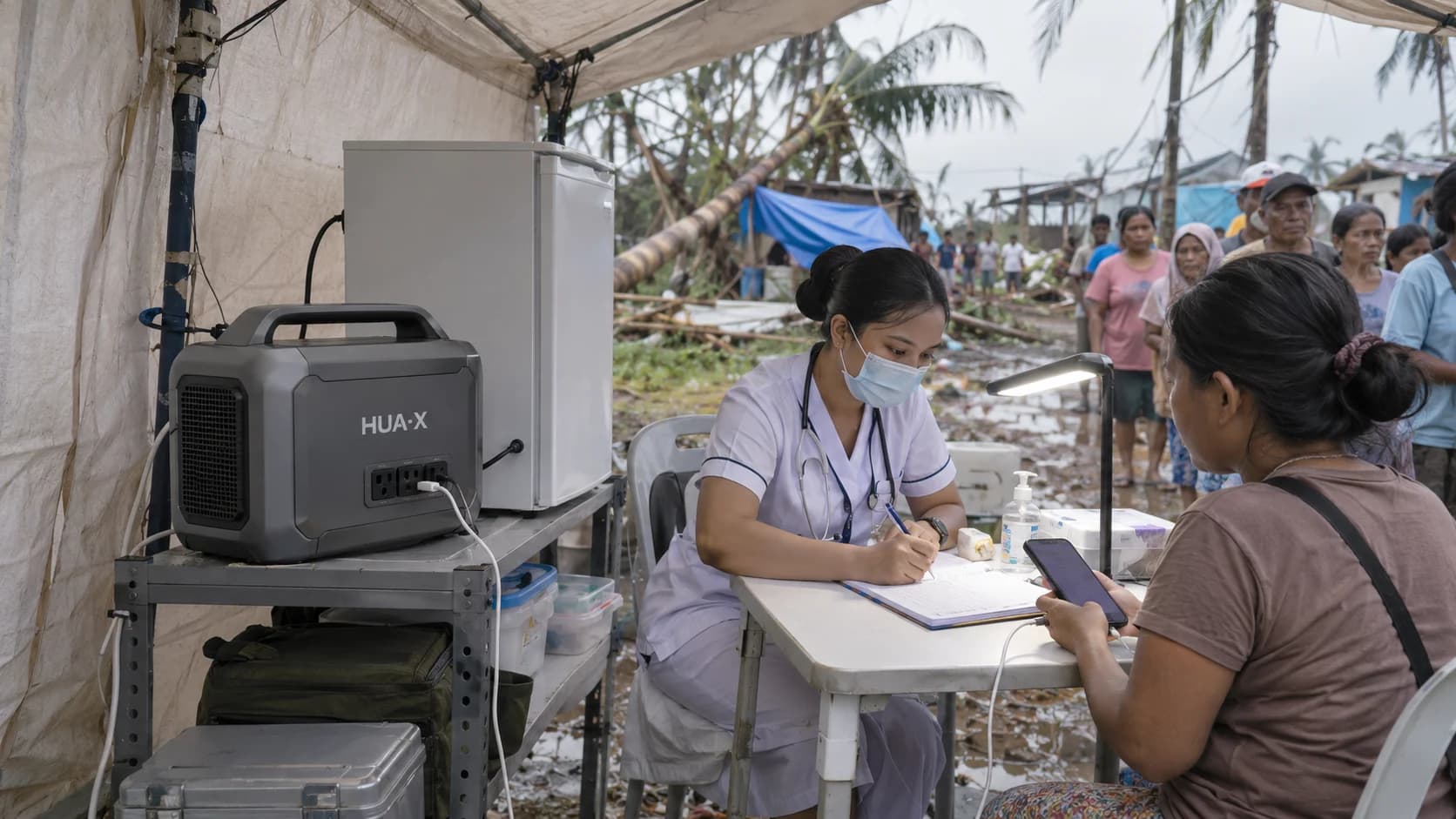
After a typhoon in 2024, communities in Cebu experienced outages lasting up to two weeks. A local relief organisation deployed portable batteries to temporary medical points, where selected electrical loads needed to operate before normal supply was restored.
The deployment supplied sixty 1 kWh, 1,000 W units. Their 12 kg mass allowed the equipment to be moved from vehicles to temporary treatment areas as the response developed.
Energy assigned to priority equipment
The intended loads included a vaccine refrigerator, examination lighting, phone charging and a small ultrasound device. In the project's refrigeration operating example, a 100 W load was supported for eight hours.
Folding 300 W solar panels provided a charging option in the field. The units used IP54 protection, and the project recorded no faults during its wet, humid deployment conditions.
A distributed emergency-power purchase
The portable units cost US$430 each, giving a purchase value of US$25,800 for sixty units. Procurement was funded through an international relief fund.
The value lay in placing a usable electrical supply near each temporary medical point. Separating priority loads and moving the battery with the response team made the equipment useful while the wider electricity network remained unavailable.
Project FAQ
Questions about this project reference
Configuration, application and operating conditions for this project.
Does the eight-hour refrigeration example include every medical-point load?
Does powering a refrigerator establish vaccine cold-chain compliance?
How was the portable format useful across the relief deployment?
Plan a similar battery project
Discuss portable storage for emergency service deployments
Share the application, destination, operating requirements, quantity and schedule to discuss a configuration for your project.
Response target: within 12 hours. Supply scope, documents, lead time and warranty are confirmed with the quotation.