
HUA-X battery project reference / Sukhumvit area, Bangkok, Thailand
Battery Swapping Supports Bangkok's Lunch and Evening Delivery Peaks
A Bangkok rental operator used 64 V / 50 Ah batteries and 46 swapping locations to support 800 delivery motorcycles through the lunch and evening delivery peaks.
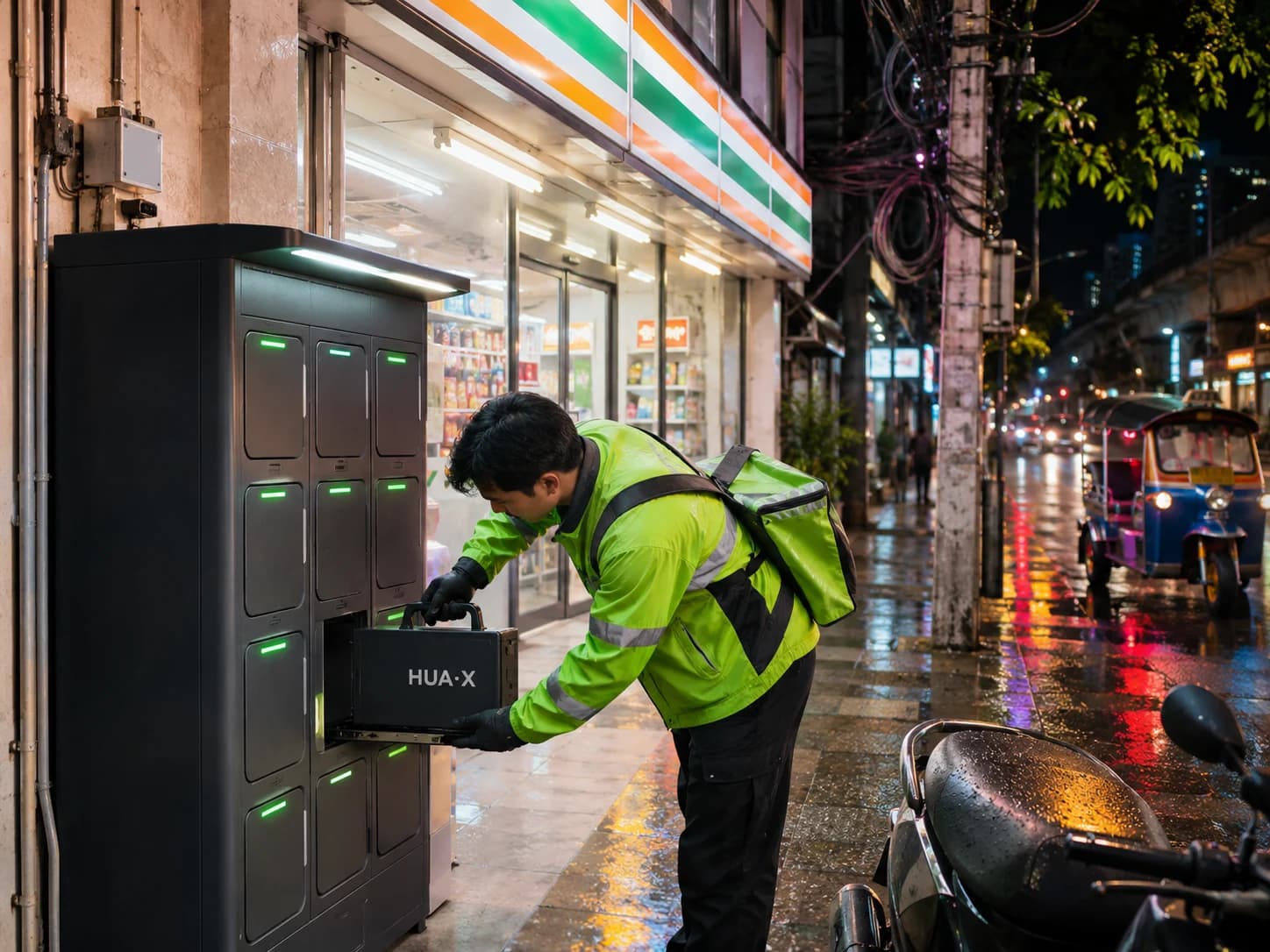
Charging could not interrupt the busiest delivery windows
A motorcycle-rental business serving delivery riders in Bangkok faced concentrated demand from 11:00 to 14:00 and again from 17:00 to 21:00. A long charging stop during either window directly reduced a rider's earning time.
The operator separated vehicle rental from battery use. Motorcycle rental cost THB 1,900 per month, while each battery exchange cost THB 35. Swapping locations were placed near convenience stores and fuel stations.
A pack suited to repeated exchanges
The 800-vehicle operation used 64 V, 50 Ah lithium iron phosphate batteries with a 20S1P arrangement and Bluetooth communication. Each pack stored 3.2 kWh and weighed 15.5 kg, compared with 21 kg for the previous pack.
Actual range in Bangkok's stop-start traffic was approximately 70 km. Riders typically exchanged batteries once or twice within a shift, using the 46-location network to fit charging around work rather than suspending work for charging.
Lighter packs within a local swapping network
The lower pack mass made repeated removal and installation less demanding for riders.
This project combined battery design with a service model. The benefits of the pack's range and mass were most useful because riders could access charged replacements close to their routes.
Project FAQ
Questions about this project reference
Configuration, application and operating conditions for this project.
Why did swapping fit the Bangkok delivery schedule?
Should a buyer compare the 70 km range or the cost per exchange?
Plan a similar battery project
Discuss batteries for a rental and swapping service
Share the application, destination, operating requirements, quantity and schedule to discuss a configuration for your project.
Response target: within 12 hours. Supply scope, documents, lead time and warranty are confirmed with the quotation.