
HUA-X battery project reference / Amsterdam, Netherlands
Weather-Resistant Batteries Support an Amsterdam Delivery Fleet
An Amsterdam operator equipped 320 delivery vehicles with 64 V / 50 Ah packs, supporting 78 km of average daily travel in a wet, cool urban environment.
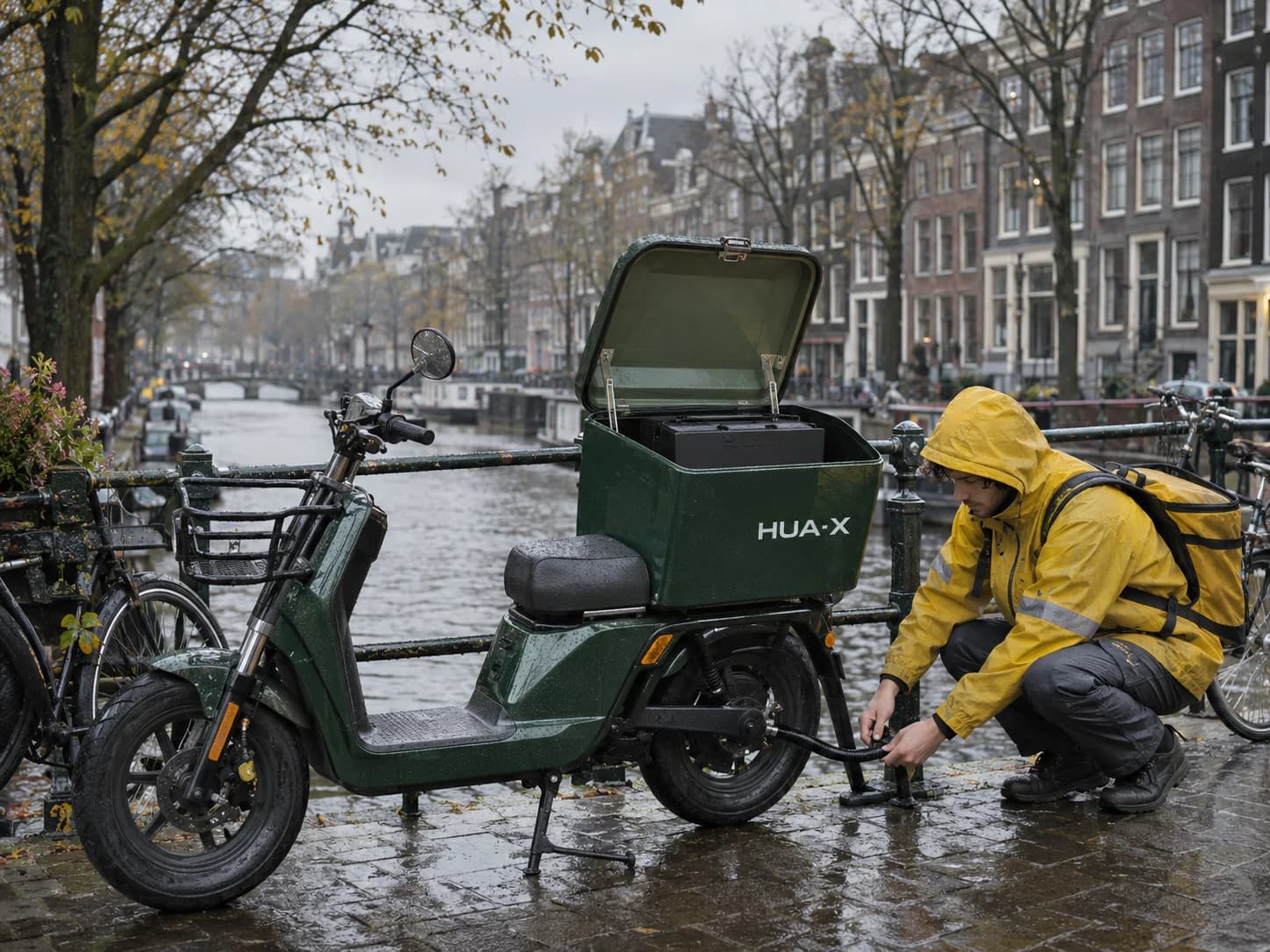
A working battery exposed to weather every day
A delivery operator in Amsterdam used electric two-wheelers for postal and parcel work. Vehicles averaged 78 km a day and returned to the depot for overnight charging. Rain, moisture in the battery compartment and cool winter temperatures were central to the specification.
The operator selected 64 V, 50 Ah packs with a 3.2 kWh rating and IP67 protection. The objective was to keep the daily route practical without making battery removal or charging a recurring disruption.
Environmental performance and charging protection
In the project's wet-condition test, inspection after 20 minutes of operation through 25 cm of standing water found no internal condensation. At an ambient temperature of 2°C, measured discharge capacity was 93% of the reference capacity.
The battery-management arrangement prevented charging below 0°C and resumed charging after the battery environment warmed. This treated cold-weather charging separately from the vehicle's ability to operate in cool conditions.
Fleet outcomes
The project purchase price was €332 per battery, and the annual replacement rate was 6%. The operator subsequently secured three municipal delivery contracts using its electric fleet.
The route and climate jointly shaped this battery specification. Daily distance, overnight charging and exposure to water shaped the installation as directly as voltage and capacity.
Project FAQ
Questions about this project reference
Configuration, application and operating conditions for this project.
Does the wet-condition test mean riders should drive through deep water?
Could the battery operate at 2°C but refuse to charge below 0°C?
Plan a similar battery project
Discuss batteries for an urban delivery fleet
Share the application, destination, operating requirements, quantity and schedule to discuss a configuration for your project.
Response target: within 12 hours. Supply scope, documents, lead time and warranty are confirmed with the quotation.